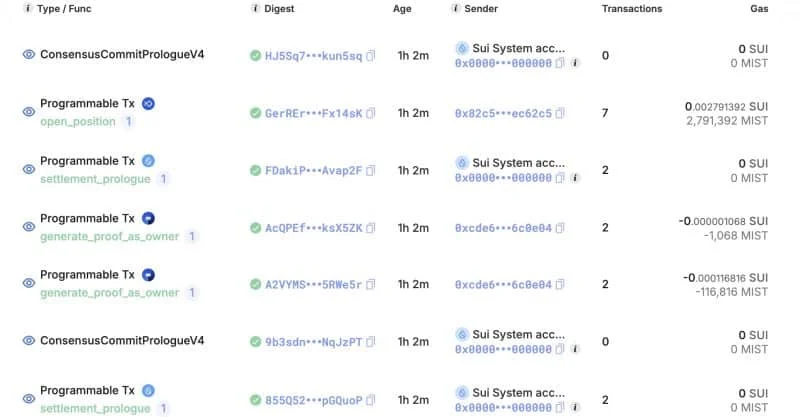
The Sui mainnet has successfully returned to full operational capacity following a significant disruption that rendered the network inaccessible for approximately five hours and fifty-five minutes. The prolonged downtime, which commenced on May 28, was attributed to a critical bug discovered in the gas charging logic within the network’s latest software release, version 1.72. This flaw in the transaction fee calculation mechanism effectively paralyzed the blockchain, halting the production of new blocks and preventing the finalization of any new transactions. Validators, acting swiftly, coordinated to implement a fix and upgrade to a patched version of the software, thereby restoring normal checkpoint production and network activity on May 29.
The Genesis of the Gridlock: A Flaw in Transaction Fee Calculation
At the heart of the recent Sui network outage was a critical misstep in the codebase responsible for calculating the gas fees users incur for their transactions. The Sui 1.72 release, intended to bring enhancements and optimizations to the network, inadvertently introduced a bug in this fundamental aspect of transaction processing. When validators began running this new version, the erroneous gas logic triggered a cascade failure, leading to an immediate cessation of new block production. In essence, the network’s internal accounting system for transaction costs broke down, and as a precautionary measure or due to the inherent design of the consensus mechanism, the entire network froze to prevent further inconsistencies.
The implications of such a fundamental bug are far-reaching. The gas fee mechanism is a cornerstone of any blockchain network, ensuring fair resource allocation and incentivizing validators to process transactions. A malfunction in this area not only disrupts user activity but also raises immediate concerns about the network’s stability and reliability. For a blockchain positioning itself as a high-throughput, scalable solution for demanding decentralized finance (DeFi) applications, an outage of this magnitude, particularly one stemming from a core logic error, can significantly erode confidence among users, developers, and potential institutional investors.
A Chronology of Disruption and Recovery
The incident unfolded with a clear timeline:
-
May 28 (Start of Outage): Validators who had upgraded to Sui’s 1.72 software release encountered the gas charging bug. This led to an immediate halt in the production of new network checkpoints, the crucial milestones that signify the finalization of blocks and transactions. Consequently, the Sui network effectively froze, with no new transactions being able to be processed or confirmed.
-
During the Outage: The network remained in this stalled state, with transactions pending and existing DeFi positions unable to be updated. Traders could not execute new trades, existing positions were vulnerable to liquidation without the ability to adjust them, and new liquidity could not be added to protocols. The inability to finalize transactions meant that any operations requiring on-chain confirmation, from simple token transfers to complex smart contract interactions, were suspended.
-
Coordination and Patching: The recovery process was not a simple matter of reverting to a previous version. Sui’s robust consensus mechanism, designed for security and decentralization, required a coordinated effort among its validators. To restore normal operations, a significant majority of validators, specifically those holding more than two-thirds of all staked tokens, needed to agree on and implement the patched software. This collaborative upgrade process, while essential for network integrity, contributed to the duration of the outage.
-
May 29 (Resolution): Following intensive coordination and the successful upgrade of the requisite validator nodes to the patched version of the software, the Sui mainnet resumed normal operations. Checkpoint production was restored, and the network began processing the backlog of pending transactions. The total downtime was officially recorded at approximately 5 hours and 55 minutes.
Technical Underpinnings and Safety Guarantees
The incident, while disruptive, highlighted the resilience of Sui’s underlying architecture. Despite the network being offline for nearly six hours, the platform’s safety guarantees held firm. Crucially, no user funds were compromised or lost during the disruption. This is a testament to the blockchain’s design, which prevented any data inconsistencies or unauthorized modifications from occurring while the chain was stalled.
Sui’s architecture, which employs a Directed Acyclic Graph (DAG) for transaction ordering alongside a Byzantine Fault Tolerance (BFT) consensus mechanism, is designed to handle high volumes of transactions with low latency. However, even robust systems are susceptible to bugs introduced through software updates. The nature of this particular bug – a flaw in the gas calculation – underscored the intricate dependencies within blockchain protocols. Even a seemingly minor error in a foundational component like transaction fee logic can have a systemic impact.
The recovery mechanism, requiring a supermajority of staked validators to upgrade, is a critical security feature. It ensures that no single entity or small group can unilaterally alter the network’s state or push through malicious updates. However, it also means that recovering from significant bugs necessitates broad consensus and coordinated action, which can be time-consuming.
DeFi Ecosystem: A Snapshot of Stasis
The impact of the Sui outage extended directly to the decentralized finance (DeFi) ecosystem built upon its infrastructure. Protocols such as lending platforms, decentralized exchanges (DEXs), and yield farming applications were effectively frozen in time.
- Trading Halt: On DEXs, users were unable to execute new trades, swap tokens, or add/remove liquidity. This meant that market participants were cut off from engaging with the Sui-based DeFi landscape.
- Stagnant Positions: For users with open positions on lending protocols, the inability to adjust collateral, repay loans, or withdraw assets meant that their financial strategies were on hold.
- Liquidation Risks: A critical concern during any blockchain outage is the potential for liquidations to be triggered. In a volatile market, if liquidations cannot be executed due to network downtime, borrowers could face increased risk of their collateral being seized when the network resumes. Fortunately, in this instance, the swift resolution of the outage prevented widespread forced liquidations.
The paralysis of DeFi protocols serves as a stark reminder of the interdependence between the underlying blockchain infrastructure and the applications built on top of it. A healthy, functional Layer 1 is the bedrock upon which a thriving decentralized ecosystem can flourish.
A Recurring Pattern: Previous Downtime and Emerging Concerns
The recent nearly six-hour outage is not an isolated incident for the Sui network. This marks the second significant multi-hour disruption the network has experienced within a relatively short period. Previously, on January 14, 2026, Sui’s mainnet endured an approximate six-hour stall caused by a different critical bug, this time related to its consensus commit mechanism.
The recurrence of extended downtime, with two major incidents occurring within approximately five months, raises questions about the robustness of Sui’s software development and testing processes. Both outages shared a similar profile: a bug introduced via a software update, followed by a complex and time-consuming process of coordinating validator upgrades across the network to resolve the issue.
This pattern is difficult to ignore for investors and observers of the blockchain space. For a network that aims to compete with established high-throughput blockchains, reliability and uptime are paramount. Frequent and prolonged outages can undermine the narrative of a stable and dependable infrastructure, potentially deterring developers from building on the platform and investors from allocating capital.
Market Reaction and Investor Sentiment
The financial markets reacted swiftly to the news of the Sui network outage. During the period of disruption, the price of the SUI token experienced a noticeable decline. Reports indicate that the token dropped to approximately $0.89, reflecting a decrease in the range of 6-8%. This price action is a direct reflection of investor sentiment; uncertainty and operational disruptions typically lead to a sell-off as traders and investors de-risk their portfolios.
Following the resumption of normal network operations, the SUI token saw a partial recovery. This post-outage rebound suggests that while the market reacted negatively to the immediate disruption, the successful resolution of the issue provided some reassurance. However, the magnitude of the price drop and the subsequent partial recovery offer a potential playbook for future market reactions should similar incidents occur.
Implications for Investors and the Sui Ecosystem
Sui has ambitiously positioned itself as a leading high-throughput Layer 1 blockchain, designed to power sophisticated DeFi applications and attract substantial institutional capital. The network has seen significant growth in its ecosystem since its launch, with the total value locked (TVL) across its various protocols reaching hundreds of millions of dollars. This growth trajectory is predicated on the promise of speed, scalability, and, crucially, reliability.
The recent outages, particularly the recurring nature of these disruptions, present a challenge to this narrative. For investors, the key implications are:
- Risk Assessment: The repeated incidents necessitate a re-evaluation of the risk associated with investing in Sui. While the recovery mechanisms are in place, the frequency of bugs in core logic suggests potential underlying issues in the development lifecycle.
- Market Volatility: As observed, the SUI token is susceptible to significant short-term price fluctuations during network disruptions. Investors need to be prepared for this volatility, especially if the network continues to experience stability issues.
- Competitive Landscape: In the competitive Layer 1 blockchain space, where numerous networks vie for developer and user adoption, consistent uptime is a critical differentiator. Sui’s recent performance places it under scrutiny compared to more established and historically stable networks.
- Developer Confidence: For developers building on Sui, the stability of the underlying infrastructure is paramount. Recurring outages can lead to hesitations in committing resources and building complex applications, potentially slowing down ecosystem growth.
The successful resolution of the latest outage is a positive step, demonstrating the network’s ability to recover. However, the underlying cause – a bug in gas fee logic – and the pattern of past disruptions will likely remain points of focus for the Sui community and the broader cryptocurrency market. Moving forward, the emphasis for Sui will be on demonstrating sustained stability, enhancing its software development and testing protocols, and rebuilding investor confidence through consistent and reliable network performance. The long-term success of Sui, as with any blockchain, will hinge on its ability to provide a stable, secure, and predictable environment for innovation and financial activity.
Disclosure: This article was edited by Editorial Team. For more information on how we create and review content, see our Editorial Policy.