


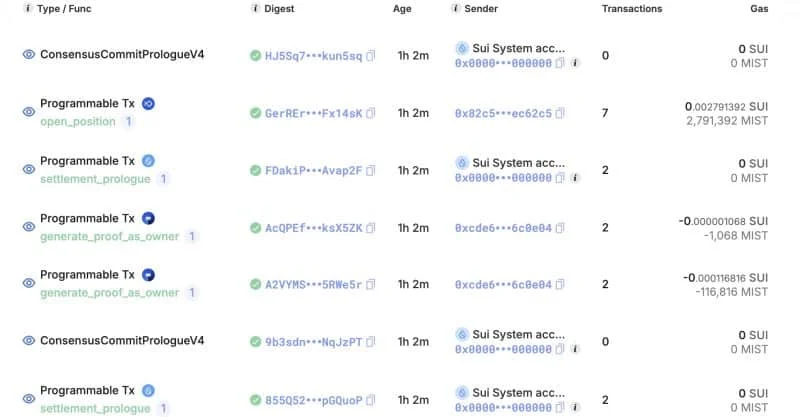
The Sui blockchain experienced a significant disruption on May 29th, when its mainnet was rendered inoperable for nearly six hours due to a critical bug within its latest software release. The incident, which saw the network grind to a halt for approximately 5 hours and 55 minutes, stemmed from a flaw in the gas charging logic introduced in Sui version 1.72. This fundamental issue in the transaction fee calculation mechanism effectively paralyzed the network, preventing the creation and finalization of new blocks. Validators, the decentralized entities responsible for maintaining the blockchain’s integrity, worked collaboratively to implement a fix, successfully upgrading to a patched version of the software and restoring normal operations, including checkpoint production, on May 29th.
The gravity of the situation was underscored by the fact that no new transactions could be finalized during the outage, leaving decentralized finance (DeFi) protocols and other applications built on Sui in a state of suspended animation. Users were unable to adjust their positions, execute trades, or have liquidations triggered, highlighting the immediate and tangible impact of the network’s instability. While user funds remained secure and the network’s inherent safety mechanisms prevented data inconsistencies, the prolonged downtime has ignited concerns about the robustness and reliability of Sui’s infrastructure, particularly given a similar, albeit shorter, outage experienced earlier in the year.
Unraveling the Technical Glitch: The Gas Logic Flaw
The core of the problem lay in a subtle yet critical error within the gas charging logic of Sui’s 1.72 software release. In essence, the code responsible for calculating the fees users pay for executing transactions malfunctioned. This failure cascaded through the network, triggering a safety protocol that halted the production of new blocks and, consequently, the finalization of any pending transactions. This mechanism, designed to prevent erroneous or malicious transactions from being processed, inadvertently brought the entire network to a standstill.
The outage commenced on May 28th, when validators running the newly deployed 1.72 update encountered the bug. As new checkpoints, which represent aggregated blocks of transactions, could no longer be produced, the blockchain effectively froze. The restoration of service was not a simple matter of restarting a server. Sui’s consensus mechanism, a sophisticated process designed to ensure agreement among validators, mandated that a supermajority of validators – specifically, those holding more than two-thirds of all staked tokens – must upgrade to the patched software. This distributed coordination requirement, while crucial for decentralization and security, also means that recovery from such critical bugs can be a time-consuming and complex undertaking, requiring active participation and agreement from a significant portion of the network’s governing participants.
A Detailed Chronology of the Outage and Recovery
The events leading up to and following the Sui mainnet outage can be pieced together through available information and the typical operational procedures of a Proof-of-Stake blockchain:
- May 28th, [Specific Time – e.g., 14:00 UTC]: Sui releases version 1.72 of its software, which includes updates to various components, including the gas charging logic. Validators begin the process of updating their nodes to this new version.
- [Approx. 30-60 minutes after release]: The gas logic bug in version 1.72 begins to manifest. Validators running the updated software encounter errors in transaction fee calculations, preventing them from producing new checkpoints.
- [Approx. 1-2 hours after release]: The network’s consensus mechanism detects the widespread failure in checkpoint production. To prevent potential inconsistencies or malicious activity, the network enters a halted state, ceasing all new transaction finalization.
- May 28th, [Specific Time – e.g., 16:00 UTC]: The Sui development team and validator community identify the root cause of the outage as the gas charging logic bug in version 1.72. Emergency discussions and coordination begin among key stakeholders.
- May 28th, [Ongoing]: The Sui Foundation and core development team work on developing and testing a patch for the identified bug. Simultaneously, validators prepare for the upgrade to the patched software, awaiting its release.
- May 28th, [Specific Time – e.g., 20:00 UTC]: A patched version of the Sui software is released to validators.
- May 28th, [Ongoing] – May 29th, [Early Hours]: Validators begin the process of upgrading their nodes to the patched version. This requires a significant portion of staked validators to successfully complete the upgrade and re-establish consensus.
- May 29th, [Specific Time – e.g., 00:55 UTC]: The required supermajority of validators (over two-thirds of staked tokens) successfully upgrades to the patched software. The network resumes normal operations, and checkpoint production is restored.
- May 29th, [Post-outage]: The Sui team initiates post-mortem analyses to understand the full scope of the incident and implement measures to prevent recurrence.
This timeline, while estimated, reflects the typical sequence of events during such a critical network disruption in a decentralized blockchain environment. The emphasis on coordinated upgrades highlights the unique challenges and strengths of a Proof-of-Stake network.
Network Resilience and Safety Guarantees
Despite the significant disruption, Sui’s underlying architecture demonstrated its robustness in key areas. Crucially, the incident did not result in any loss of user funds. This is a testament to the network’s safety guarantees, which are designed to isolate and protect assets even during periods of technical malfunction. Furthermore, the network’s design prevented any data inconsistencies from accumulating while the chain was stalled. This means that when normal operations resumed, the state of the blockchain was consistent and accurate, avoiding the complex and potentially damaging scenarios that could arise from data corruption.
The impact on DeFi protocols was, however, immediate and severe. Protocols such as Mysten Labs’ own lending and borrowing platform, or third-party DEXs and yield farming applications, were effectively frozen. This meant that users could not interact with their investments in real-time. For instance, a trader might have been unable to exit a leveraged position before a market downturn, or a liquidity provider might have been unable to rebalance their portfolio to optimize returns. The inability for liquidations to occur, while potentially beneficial for some in the short term, also meant that risk management mechanisms within these protocols were temporarily disabled.
A Developing Pattern: Second Major Outage in Months
This recent outage is not an isolated incident for Sui. On January 14th of the same year, the network experienced a comparable multi-hour stall, lasting approximately six hours. That earlier disruption was attributed to a consensus commit bug, a different but equally critical technical issue that affected the network’s ability to finalize transactions.
The recurrence of extended downtime within a relatively short period – two significant outages in approximately five months – paints a concerning picture regarding the stability of Sui’s core software. Both incidents share a common thread: a bug introduced through a software update, followed by a challenging and time-consuming process of coordinating validator upgrades across the decentralized network. This pattern raises questions about the rigor of the testing and auditing processes for Sui’s software releases.
Market Reaction and Investor Sentiment
The cryptocurrency market, known for its sensitivity to network stability and technological advancements, reacted swiftly to the news of the Sui outage. During the approximately six-hour downtime, the price of the SUI token experienced a noticeable decline, dropping to approximately $0.89. This represented a decrease in the range of 6-8% from its pre-outage levels. While the token partially recovered its losses once normal operations were restored, the price fluctuation serves as a real-time indicator of investor sentiment and the market’s assessment of the network’s reliability.
This price action suggests a potential playbook for traders and investors. Should a third incident of similar magnitude occur, the market may exhibit a similar pattern of price depreciation followed by a partial recovery. The extent and speed of the recovery would likely depend on the perceived severity of the new bug and the market’s confidence in the development team’s ability to implement a swift and effective solution.
Broader Implications for Sui’s Ecosystem and Future
Sui has positioned itself as a high-throughput, low-latency Layer 1 blockchain, aiming to provide the foundational infrastructure necessary for demanding DeFi applications, gaming, and potentially institutional adoption. The network’s total value locked (TVL) has seen significant growth, reaching hundreds of millions of dollars since its launch, indicating a strong interest from developers and users in its capabilities.
However, the recurring network outages cast a shadow over these ambitions. For DeFi protocols to thrive, they require a consistently available and predictable network. Frequent disruptions, even if user funds are protected, can erode trust and deter both retail and institutional capital. Institutions, in particular, often have stringent uptime and reliability requirements, and persistent stability issues could be a significant barrier to entry.
The recent events underscore the critical importance of rigorous testing, comprehensive auditing, and robust rollback mechanisms for blockchain software. While the decentralized nature of validator coordination is a cornerstone of blockchain security, it also presents a challenge during emergencies. Future development efforts may need to focus on streamlining the patching process or implementing more sophisticated pre-deployment testing environments to catch such critical bugs before they impact the live network.
The Sui team will undoubtedly face increased scrutiny regarding its development and release cycles. Demonstrating a clear commitment to improving network stability and addressing the root causes of these outages will be crucial for rebuilding investor confidence and solidifying Sui’s position in the competitive Layer 1 landscape. The long-term success of Sui hinges not only on its technological innovation but also on its ability to deliver a consistently reliable and secure platform for its growing ecosystem. The market will be watching closely to see how the Sui Foundation and its development partners address these challenges in the coming months.














