


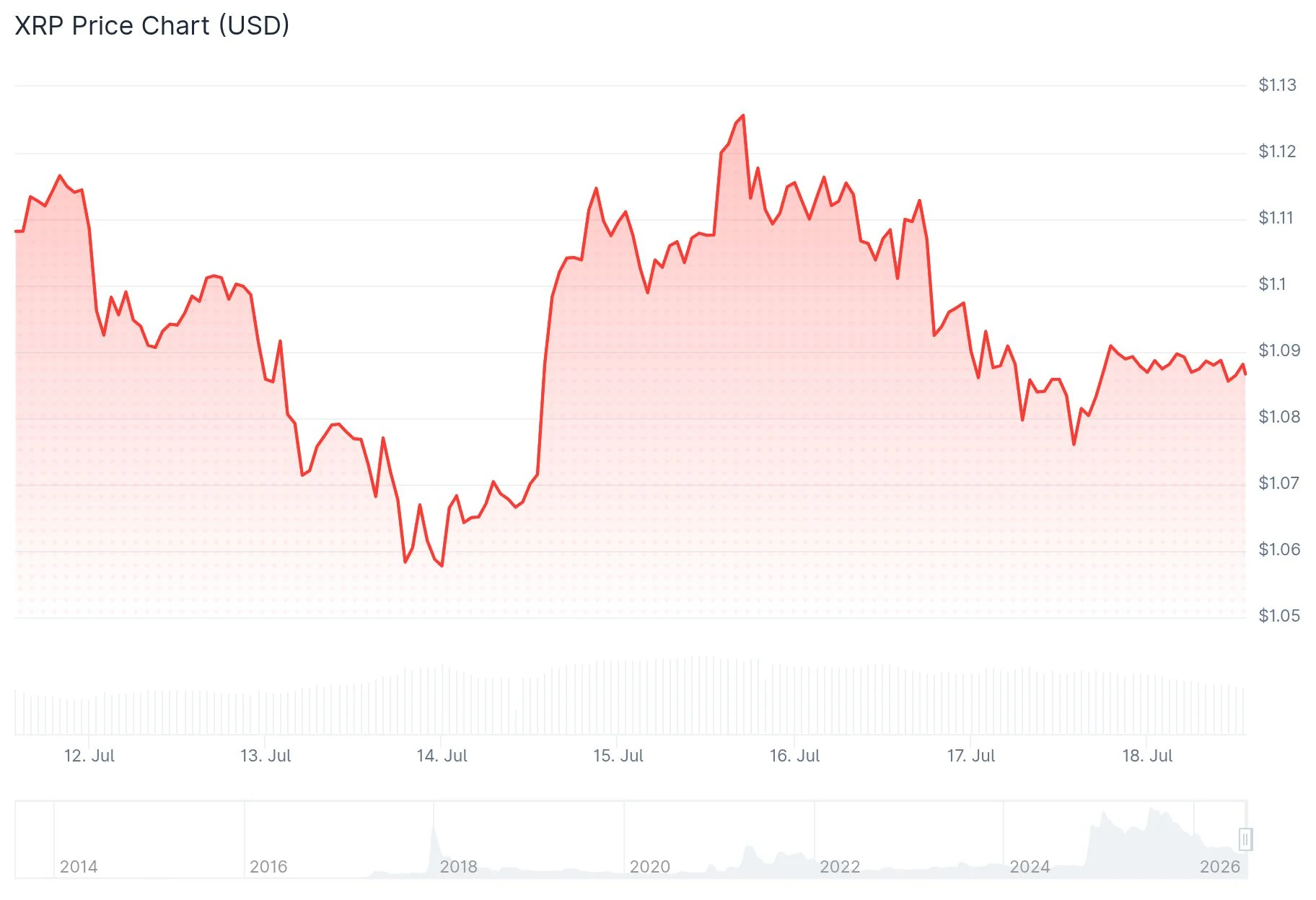
For years, XRP has stood as one of the cryptocurrency sector’s most intensely debated digital assets, meticulously carving out a niche with its specialized focus on facilitating international payments and serving institutional clients. This strategic alignment fundamentally differentiates it from the broader, more general-purpose blockchain platforms like Bitcoin and Ethereum, positioning it as a critical infrastructure layer for the global financial system rather than a universal decentralized network. After an arduous and extended period largely overshadowed by significant regulatory challenges, XRP has demonstrably transitioned into what many market observers and participants perceive as a more promising and stable chapter. The emergence of enhanced legal clarity, particularly following key court rulings, coupled with the burgeoning introduction of regulated spot Exchange Traded Product (ETP) offerings, and Ripple’s proactive and aggressive global partnership strategy, have collectively reignited substantial attention from the investment community, prompting a renewed examination of its long-term potential.
The central and most pressing question facing investors, financial analysts, and market enthusiasts today revolves around a straightforward yet complex inquiry: what realistic price level could XRP, the native digital asset of the XRP Ledger, genuinely achieve by the year 2031? This projection necessitates a comprehensive evaluation of technological advancements, market adoption, the evolving regulatory environment, and the broader macroeconomic landscape shaping the future of digital assets.
XRP’s Unique Positioning and Historical Context
At its core, XRP was designed with a singular, ambitious purpose: to offer a superior alternative to traditional cross-border payment systems, which are often characterized by their slowness, high costs, and operational inefficiencies. Launched in 2012 by Ripple Labs (formerly OpenCoin), the XRP Ledger (XRPL) was engineered to process transactions with remarkable speed—typically within 3-5 seconds—and at negligible costs, positioning it as an ideal intermediary currency for international remittances and institutional liquidity. Unlike Bitcoin, which operates on a Proof-of-Work consensus mechanism, or Ethereum, which transitioned to Proof-of-Stake, the XRPL utilizes a unique federated consensus mechanism, allowing for high throughput and energy efficiency.
From its inception, Ripple’s strategy was distinct. Instead of targeting individual retail users as its primary base, the company focused on cultivating relationships with banks, financial institutions, and payment service providers globally. Its flagship product, On-Demand Liquidity (ODL), utilizes XRP to facilitate instant, low-cost cross-border payments by effectively bridging different fiat currencies without the need for pre-funded nostro/vostro accounts. This model sought to disrupt the multi-trillion-dollar global remittance market, offering a more efficient and transparent alternative to legacy systems like SWIFT. This institutional orientation, while defining its utility, also became a point of contention in its later regulatory battles.
The Shadow of Litigation: The SEC vs. Ripple Lawsuit
A pivotal and defining period in XRP’s history began in December 2020 when the U.S. Securities and Exchange Commission (SEC) filed a lawsuit against Ripple Labs and its executives, alleging that XRP was an unregistered security and that its sales constituted illegal securities offerings. This legal action cast a long shadow over XRP, leading to its delisting or suspension from numerous U.S.-based exchanges, a significant decline in its market capitalization, and a general chilling effect on institutional engagement within the U.S. market. The lawsuit argued that XRP met the criteria of an investment contract under the Howey Test, a long-standing legal precedent for determining what constitutes a security.
The legal battle became a landmark case for the entire cryptocurrency industry, with profound implications for how digital assets would be classified and regulated in the United States. Key milestones in this chronology included:
- December 2020: SEC files lawsuit against Ripple.
- Early 2021: Numerous exchanges delist or suspend XRP trading for U.S. customers.
- Mid-2021 to Mid-2023: Extensive legal discovery, motions, and filings by both parties, with intense scrutiny on internal SEC communications and expert testimonies.
- July 13, 2023: A partial summary judgment by Judge Analisa Torres ruled that programmatic sales of XRP on exchanges did not constitute securities offerings, while institutional sales did. This was a monumental, albeit mixed, victory for Ripple, as it provided much-needed clarity on XRP’s status in secondary markets.
- October 2023: The SEC voluntarily dismissed its charges against Ripple’s CEO Brad Garlinghouse and Executive Chairman Chris Larsen, signaling a significant concession and further easing regulatory pressure.
The implications of these rulings were immediate and far-reaching. XRP was swiftly relisted on several U.S. exchanges, and its price saw a substantial surge. More importantly, the decision provided a crucial precedent for distinguishing between different types of digital asset sales, offering a degree of regulatory certainty that the industry had desperately sought. Ripple executives, including CEO Brad Garlinghouse and Chief Legal Officer Stuart Alderoty, consistently expressed confidence in their legal position, emphasizing that the SEC’s approach was harming innovation and consumer protection. They viewed the July 2023 ruling as a validation of their long-held stance that XRP, in most contexts, functions as a utility token rather than an investment contract.
A New Chapter: Regulatory Clarity and Market Resurgence
With the significant legal overhang largely resolved, XRP has undeniably entered a new, more promising chapter. The newfound regulatory clarity, particularly within the crucial U.S. market, has paved the way for renewed institutional interest and engagement. This clarity is not merely a U.S. phenomenon; global regulators are increasingly developing frameworks for digital assets, and XRP, having navigated a major legal challenge, stands to benefit from a more predictable operating environment.
Ripple itself has not been idle during these challenging years. The company has aggressively pursued a global partnership strategy, expanding its network of financial institutions and payment service providers across continents. This expansion includes collaborations in regions with rapidly growing remittance markets, such as Latin America, the Middle East, and Asia. Ripple’s consistent messaging has underscored its commitment to building the infrastructure for a more efficient global financial system, leveraging XRP as a core component.
A critical growth driver in this renewed landscape is the emergence of regulated spot ETPs for cryptocurrencies. Following the successful launch of Bitcoin spot ETFs in the U.S., the market is anticipating similar products for other major digital assets. XRP-based ETPs represent a significant milestone, as these regulated investment vehicles dramatically lower the barriers for traditional institutional and retail investors seeking exposure to the asset. Such products provide a familiar and compliant wrapper for investment, attracting capital from pension funds, endowments, and wealth managers who might otherwise be hesitant to directly hold cryptocurrencies. Sustained inflows into these products could create supply constraints for XRP while simultaneously expanding demand channels, fostering price appreciation.
Driving Factors for Future Growth
Several intertwined factors are poised to influence XRP’s trajectory towards 2031:
-
Institutional Partnerships and Cross-Border Payments (ODL): Ripple has systematically developed relationships with financial institutions and payment service providers worldwide. The continued adoption and expansion of its On-Demand Liquidity (ODL) solution are paramount. As more financial institutions integrate ODL into their operations, the demand for XRP as a bridge currency for real-time gross settlement will naturally increase. The global cross-border payments market is projected to reach trillions of dollars annually, and even capturing a fraction of this market could significantly impact XRP’s utility and value. Ripple’s consistent efforts to onboard new partners, even during the lawsuit, indicate a strong foundation for future growth in this area.
-
Expansion of XRP Ledger Use Cases (Tokenization, DeFi, RLUSD): Beyond its primary function in payments, the XRP Ledger (XRPL) continues to broaden its utility. The platform’s inherent speed, low transaction costs, and scalability make it attractive for a variety of emerging applications:
- Tokenization of Tangible Assets: The tokenization of real-world assets (RWAs) such as real estate, commodities, and art is projected to become a multi-trillion-dollar market. The XRPL’s robust infrastructure and built-in decentralized exchange (DEX) are well-suited for issuing, managing, and trading tokenized assets efficiently. If the XRPL can capture a substantial portion of this activity, it would create significant new demand for XRP as a native asset for transaction fees and liquidity.
- Decentralized Finance (DeFi) Applications: While not traditionally a DeFi hub like Ethereum, the XRPL is seeing increasing development in decentralized finance. This includes lending protocols, stablecoins, and other financial services that could leverage XRP for collateral or liquidity.
- Supporting the RLUSD Stablecoin Infrastructure: Ripple’s planned launch of a USD-backed stablecoin, RLUSD, on both the XRPL and Ethereum, is a strategic move. While RLUSD itself is not XRP, its presence on the XRPL could enhance the network’s liquidity, foster more activity, and potentially create a synergistic effect where increased stablecoin usage leads to greater demand for XRP for transaction fees or as part of various liquidity pools.
-
The Role of Spot ETP Products: The regulatory green light for spot ETPs for cryptocurrencies, particularly in major financial markets, is a game-changer. These products, whether ETFs or other similar vehicles, democratize access to digital assets for a broader investment base. They provide a compliant, liquid, and secure way for institutional investors—including traditional asset managers, pension funds, and sovereign wealth funds—to gain exposure to XRP without the complexities of direct ownership, custody, or navigating cryptocurrency exchanges. The demand generated by these institutional inflows could exert significant upward pressure on XRP’s price, potentially creating a "reflexivity loop" where rising prices attract more investment, further driving prices up.
XRP Price Projections for 2031: A Spectrum of Outcomes
Forecasting cryptocurrency prices over a nearly decade-long horizon is inherently complex, given the rapid pace of technological innovation, regulatory shifts, and evolving market dynamics. However, by considering various scenarios—moderate, optimistic, and pessimistic—investors can develop a more comprehensive understanding of potential outcomes.
Moderate Projection: Steady Institutional Adoption
Under moderate assumptions, which account for continued, albeit not explosive, institutional adoption of Ripple’s payment solutions and a gradual expansion of the XRP Ledger’s use cases, XRP is projected to trade between $5 and $8 by the end of the decade. This scenario assumes that Ripple successfully expands its ODL network, the XRPL gains traction in a few niche tokenization or DeFi segments, and XRP ETPs see steady, but not overwhelming, inflows.
Such valuations would correspond to a total market capitalization spanning approximately $325 billion to $520 billion, based on the current circulating supply of XRP. This level of market capitalization would place XRP among the top digital assets, reflecting its established utility in cross-border payments and a growing, diversified ecosystem. This projection implies a significant increase from current levels but remains conservative enough to account for competitive pressures and potential market volatility. It also assumes that while the regulatory environment remains generally favorable, no major, unforeseen regulatory headwinds emerge.
Optimistic Projection: Dominant Infrastructure Layer and Tokenization Boom
The bullish forecast operates under the premise that XRP establishes itself as a dominant infrastructure layer for institutional transaction settlement and international money transfers, significantly displacing traditional systems. This scenario envisions Ripple’s ODL becoming a ubiquitous standard for cross-border payments, with financial institutions globally relying on XRP for instant liquidity.
A crucial accelerator in this optimistic outlook is the widespread adoption and success of XRP-based ETP products. These regulated investment vehicles are assumed to attract massive, sustained inflows from traditional finance, creating substantial demand that outstrips available supply. This would fundamentally alter XRP’s market dynamics, transforming it from a niche utility token into a mainstream institutional investment vehicle.
Furthermore, this projection hinges on the tokenized asset sector evolving into a multi-trillion-dollar market, where the XRP Ledger successfully captures a substantial portion of that activity. If the XRPL becomes a preferred platform for issuing and trading tokenized real-world assets, from fractionalized real estate to digital bonds, the demand for XRP as a transaction fee asset and for providing liquidity within the ecosystem would skyrocket. Under these highly favorable conditions, XRP’s total value could approach the $1 trillion threshold. In such a scenario, individual token prices would realistically fall within the $15 to $25 range. While this represents an aggressive projection, given the potential scale of institutional adoption and the tokenization market, a growing number of long-term holders and some analysts no longer consider it entirely implausible, especially considering the long-term outlook for digital asset integration into global finance.
Pessimistic Projection: Implementation Challenges and Intense Competition
Conversely, the pessimistic projection highlights significant vulnerabilities and challenges that could impede XRP’s growth. The primary concern centers on implementation challenges: Ripple’s payment infrastructure could achieve commercial success and widespread adoption without necessarily translating into proportionate demand for the underlying XRP token. This could occur if institutions use Ripple’s software but opt for other liquidity solutions or if the architecture allows for minimal XRP exposure, reducing its utility as a bridge currency.
Meanwhile, competitive pressure continues to intensify from multiple fronts. The digital asset landscape is dynamic, with numerous powerful contenders vying for market share in institutional payment settlement and asset tokenization:
- Ethereum Layer 2 Solutions: Networks like Arbitrum and Optimism offer scalability and lower transaction costs for Ethereum-based applications, potentially drawing away DeFi and tokenization projects.
- Solana’s Payment Rails: Solana’s high throughput and low fees make it an attractive platform for fast payments and various decentralized applications, directly competing with XRP’s speed advantage.
- Fiat-Backed Stablecoins: Stablecoins like USDT and USDC are already widely used for international transfers and liquidity provision, offering a direct, stable alternative without the volatility of XRP.
- Emerging Central Bank Digital Currencies (CBDCs): Governments worldwide are exploring or developing CBDCs, which could offer sovereign-backed digital payment rails that might bypass private solutions like XRP. While Ripple has expressed willingness to collaborate with CBDC initiatives, the ultimate impact remains uncertain.
Under this less favorable scenario, where these competitive pressures are intense, implementation hurdles limit XRP’s token utility, or unforeseen regulatory setbacks emerge, XRP’s trading range could remain confined between $1 and $2 throughout the next half-decade. This scenario implies that XRP would struggle to break out of its current market positioning, failing to achieve the widespread institutional adoption or significant tokenization market share necessary for substantial price appreciation.
Navigating Competitive Landscapes and Implementation Hurdles
XRP’s distinguishing characteristic remains its institutional orientation. Rather than positioning itself as a multipurpose blockchain platform attempting to be all things to all users, it is strategically aligned as foundational infrastructure supporting the global financial system. This focus is both its greatest strength and its potential vulnerability. The success of Ripple’s enterprise solutions is undeniable, with a growing roster of partners. However, the direct correlation between the success of RippleNet or ODL and the demand for the XRP token itself has been a consistent point of debate. Critics argue that institutions might use Ripple’s technology without necessarily needing to hold or utilize large quantities of XRP, potentially capping its growth.
Furthermore, the competition for institutional digital asset solutions is heating up. Traditional finance giants are developing their own blockchain-based payment systems, and established payment networks are integrating new technologies. The regulatory landscape, while showing signs of clarity in the U.S., remains fragmented globally, posing compliance challenges for a truly global payment solution.
The Blended Outlook: A Calculated Expectation
To arrive at a more balanced projection, it is customary to factor in probability weights across the bear, base (moderate), and bull scenarios. By assigning reasonable probabilities to each outcome—for example, a 20% chance for the pessimistic scenario, a 50% chance for the moderate scenario, and a 30% chance for the optimistic scenario—a blended price expectation for XRP by 2031 can be derived.
When considering these probability weights, the calculated blended price expectation for XRP by 2031 lands at approximately $7.90. This figure represents a weighted average of the various possibilities, acknowledging both the significant upside potential driven by institutional adoption and tokenization, as well as the downside risks associated with competition and implementation challenges. It suggests a strong belief in XRP’s long-term utility and its strategic position within the evolving financial ecosystem, but also a pragmatic understanding of the hurdles that remain.
Broader Implications for the Digital Asset Ecosystem
XRP’s journey to 2031 is not merely a story about a single cryptocurrency; it reflects the broader maturation and institutionalization of the entire digital asset ecosystem. The resolution of its regulatory challenges in the U.S. has set a precedent, offering a roadmap for other digital assets facing similar scrutiny. The success or struggle of XRP in attracting institutional capital and fostering real-world utility will serve as a crucial barometer for the wider industry’s ability to integrate with traditional finance.
The growing acceptance of crypto ETPs, the accelerating trend of asset tokenization, and the ongoing global dialogue around digital currency regulation all point to a future where digital assets play an increasingly integral role in the global economy. XRP, with its unique institutional focus and battle-tested resilience, is positioned at the forefront of this transformation. Its price trajectory by 2031 will be a testament not only to Ripple’s execution but also to the broader industry’s capacity to deliver on the promise of a more efficient, transparent, and inclusive global financial system.














