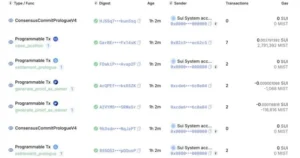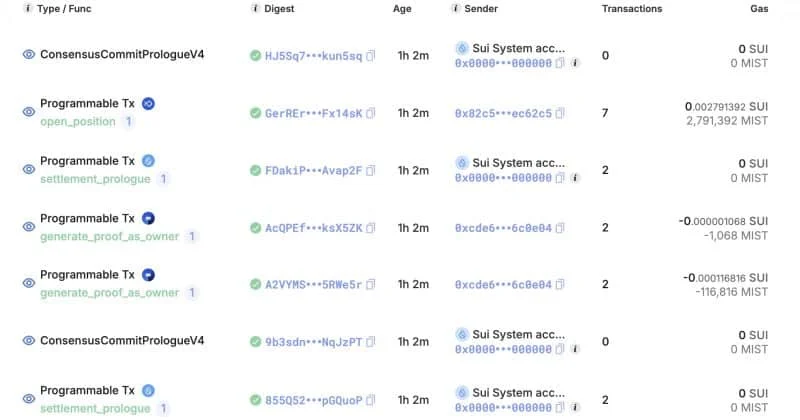
The Sui blockchain network has successfully resumed normal operations following a significant outage that lasted approximately 5 hours and 55 minutes. The disruption, which commenced on May 28th, was attributed to a critical bug within the gas charging logic of Sui’s latest software release, version 1.72. This marks the second multi-hour network interruption for Sui in 2024, raising concerns among users and investors about the platform’s stability and reliability. The network’s validators, acting in concert, implemented a fix and upgraded to a patched version of the software, thereby restoring the production of new checkpoints and re-establishing normal transaction processing on May 29th.
The Genesis of the Outage: A Flaw in Transaction Fee Calculation
The core of the problem lay in a fundamental component of the Sui network’s operation: the system responsible for calculating transaction fees, commonly referred to as "gas." In essence, the code that determines how much users must pay to execute transactions on the Sui blockchain malfunctioned. This critical failure in the gas charging logic had a cascading effect, leading the entire network to halt the processing of new blocks. Without a functional mechanism to assign and collect transaction fees, the network’s internal mechanisms for maintaining order and processing new states were effectively paralyzed.
A Detailed Chronology of the Disruption and Recovery
The incident began on the evening of May 28th, when validators who had adopted the 1.72 software update started encountering the critical bug. This led to an immediate cessation of new checkpoint production, the process by which new blocks of transactions are finalized and added to the blockchain. Consequently, no new transactions could be confirmed or completed, effectively freezing the Sui network in its current state.
The path to recovery was not instantaneous. Unlike a simple restart, the consensus mechanism of the Sui blockchain necessitates a significant majority of validators to adopt any critical software updates. In this instance, a consensus of validators holding more than two-thirds of all staked tokens were required to upgrade to the patched software release before the network could safely resume its operations. This coordination effort, while crucial for maintaining network integrity, inherently takes time, especially in a decentralized environment with numerous independent validators.
The process involved identifying the bug, developing a solution, testing the patched software, and then disseminating it to the global network of validators. Once a sufficient quorum of validators upgraded, the network could begin the process of synchronizing and resuming checkpoint production, gradually bringing the ecosystem back online.
Unwavering Safety Guarantees Amidst Disruption
Despite the prolonged downtime, a crucial positive aspect of the incident is that Sui’s core safety guarantees remained intact. No user funds were compromised or lost during the nearly six-hour outage. The architectural design of the Sui network proved resilient, preventing any data inconsistencies or corruptions from occurring while the chain was in a stalled state. This is a testament to the underlying security features that are fundamental to blockchain technology, ensuring that even during disruptions, the integrity of the ledger is preserved.
However, the impact on decentralized finance (DeFi) protocols built on Sui was immediate and significant. During the outage, these applications were effectively frozen. Users were unable to adjust their existing positions, execute new trades, or participate in critical functions like liquidations. For DeFi users, this meant a period of inactivity where their assets were essentially locked, unable to be managed or leveraged. This highlights the direct dependence of DeFi applications on the continuous and uninterrupted operation of the underlying blockchain infrastructure.
A Developing Pattern of Network Instability
The May 28th outage is not an isolated incident for the Sui network in 2024. This marks the second time this year that Sui has experienced a prolonged multi-hour disruption. On January 14th, the network faced a similar scenario, with a stall lasting approximately six hours. That earlier incident was attributed to a bug in the consensus commit mechanism, a different but equally fundamental component of blockchain operation.
The recurrence of such significant outages within a relatively short period—two major disruptions in less than six months—establishes a concerning trend. Both incidents share a common thread: a critical bug introduced via a software update, followed by a substantial period of network downtime as validators scrambled to coordinate and implement a fix across the decentralized network. This pattern suggests potential underlying issues with the software development and deployment lifecycle for the Sui blockchain, necessitating a deeper examination of quality assurance and testing protocols.
Market Reaction and Investor Sentiment
The market’s reaction to the outage was swift and discernible. The SUI token, the native cryptocurrency of the Sui blockchain, experienced a price decline during the period of disruption. Reports indicate that the price dropped to approximately $0.89, representing a decline in the range of 6-8%. This price movement closely mirrored investor sentiment, with the market reacting negatively to the perceived instability of the network. Following the resumption of normal operations, the SUI token saw a partial recovery, suggesting that while the outage caused short-term apprehension, the market retained some confidence in the network’s eventual restoration.
For traders and investors in the Sui ecosystem, this price behavior during the outage and subsequent partial recovery may represent a discernible pattern. If a third major incident were to occur, the market might react in a similar fashion, with an initial price drop followed by a recovery post-resolution. This underscores the importance of network uptime and stability for the sustained value and investor confidence in any blockchain project.
Implications for Sui’s Position in the Blockchain Landscape
Sui has ambitiously positioned itself as a high-throughput Layer 1 blockchain, aiming to provide the robust infrastructure necessary to support demanding decentralized finance applications and, crucially, to attract institutional capital. The growth of its ecosystem, with total value locked (TVL) reaching hundreds of millions of dollars since its launch, indicates significant developer and user adoption. However, frequent and prolonged network outages can undermine these aspirations.
The promise of high throughput and scalability is rendered less valuable if the network cannot consistently remain operational. For DeFi applications, which rely on real-time execution and constant availability, even short periods of downtime can lead to significant financial losses and reputational damage. For institutional investors, who often require a high degree of certainty and reliability, repeated disruptions can be a major deterrent.
The recurring stability issues raise questions about the maturity of Sui’s technology and its operational readiness for the demands of a rapidly evolving blockchain landscape. While the network’s safety features have proven effective in preventing fund loss, the frequency of disruptions suggests a need for enhanced rigorous testing, validation processes, and potentially a more conservative approach to software updates.
The Path Forward: Addressing Stability Concerns
The Sui Foundation and the development team face a critical juncture. The immediate priority is to conduct a thorough post-mortem analysis of the gas charging logic bug and the consensus commit bug from January. This analysis should not only identify the root causes but also lead to concrete improvements in their development and testing methodologies.
Potential areas of focus include:
- Enhanced Testing Frameworks: Implementing more comprehensive stress testing, regression testing, and integration testing to proactively identify bugs before they are deployed to the mainnet. This might involve simulating a wider range of network conditions and transaction types.
- Staged Rollouts and Canary Releases: Adopting a phased approach to software updates, where new versions are first deployed to a smaller subset of validators or a testnet environment to monitor performance and stability before a full mainnet rollout.
- Bug Bounty Programs: Potentially expanding or refining bug bounty programs to incentivize the broader community of developers and security researchers to identify vulnerabilities.
- Validator Community Communication and Education: Ensuring clear and timely communication with validators regarding upcoming updates, potential risks, and best practices for deployment.
The resilience of the Sui network in the face of these challenges will be a key determinant of its long-term success. As the blockchain space continues to mature, users and investors are increasingly prioritizing reliability and stability alongside innovation and performance. Sui’s ability to learn from these incidents and implement robust solutions will be crucial in rebuilding and maintaining trust within its ecosystem and the broader cryptocurrency market. The coming months will be telling as to whether Sui can move beyond these early stability hurdles and fulfill its ambitious vision of becoming a leading Layer 1 blockchain.