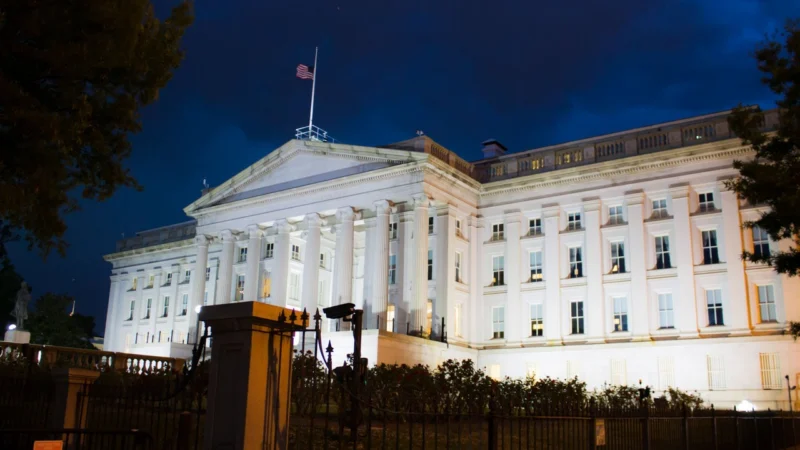
The United States Department of the Treasury’s Office of Foreign Assets Control (OFAC) has executed its third major enforcement action against the Cambodia-based Prince Group, signaling a persistent and escalating effort to dismantle what federal authorities describe as a sophisticated transnational criminal organization. On November 5, 2026, OFAC officially designated 45 new targets, comprising four high-level individuals and 41 corporate entities, all allegedly linked to a multi-billion-dollar ecosystem of cyber-enabled financial crimes, including digital asset investment schemes and human trafficking-fueled "pig butchering" scams.
This latest tranche of sanctions represents a critical escalation in the U.S. government’s strategy to isolate the financial infrastructure supporting organized crime in Southeast Asia. By targeting a sprawling network of shell companies across several jurisdictions—including the British Virgin Islands, Hong Kong, Cambodia, Singapore, Mauritius, and Malaysia—the Treasury aims to sever the Prince Group’s access to the international financial system and disrupt the laundering of illicit crypto-assets.
The Targeted Individuals and the Prince Group Apparatus
The four individuals named in the November 5 designation—Qiu Yong, Zhao Mengyao, He Yujing, and Visal Pang—are described by Treasury officials as key facilitators within the Prince Group’s operational hierarchy. These individuals are alleged to have managed the complex logistics of the organization’s fraudulent activities, overseeing both the technical aspects of the crypto scams and the financial maneuvers required to obscure the origin of stolen funds.
The Prince Group, which has historically presented itself as a diversified conglomerate with interests in real estate, banking, and investment, has come under intense scrutiny by international regulators over the past three years. Washington’s designation of the group as a transnational criminal organization (TCO) marks a shift from viewing these activities as isolated fraud cases to recognizing them as part of a centralized, highly organized criminal enterprise.
The 41 entities targeted in this round highlight the geographic breadth of the organization. By utilizing corporate vehicles in established financial hubs like Singapore and Hong Kong, as well as offshore jurisdictions like the British Virgin Islands and Mauritius, the Prince Group allegedly created a "layered" financial structure. This structure is designed to frustrate law enforcement by moving funds through multiple borders and legal systems, making the ultimate destination of the assets difficult to track.
A Growing Chronology of Enforcement
The November 2026 sanctions are the latest in a series of targeted strikes against the Prince Group. The timeline of the U.S. Treasury’s campaign reveals a systematic approach to identifying and neutralizing the group’s assets:
- October 2025: The first round of sanctions was launched, focusing on the core leadership and the primary holding companies associated with the group’s initial forays into unregulated online gambling and early-stage crypto fraud.
- June 2026: The second tranche targeted the group’s technology providers and software developers, who were accused of building the fraudulent investment platforms used to lure victims.
- November 2026: The current third round expands the net to include the broader money laundering network and secondary facilitators who manage the "cash-out" operations and shell company management.
This phased approach suggests that as the Prince Group attempts to pivot or establish new front companies to bypass previous restrictions, U.S. intelligence and financial monitoring are successfully identifying these new nodes in the network.
The Mechanics of the "Scam Machine"
According to the Treasury’s detailed report, the Prince Group’s revenue is generated through a predatory model of cyber-enabled fraud. The primary methods include digital asset investment scams and "romance scams," often referred to as "pig butchering" (Sha Zhu Pan). In these schemes, perpetrators build long-term trust with victims through social media or dating apps before convincing them to invest in fraudulent cryptocurrency platforms.
However, the Treasury’s findings emphasize that the harm of these operations is not limited to the financial loss of the victims. A significant portion of these scams is allegedly operated out of fortified compounds in Southeast Asia, particularly in Cambodia. These compounds have been widely implicated in human trafficking and forced labor.
Investigations by international human rights organizations and the United Nations have previously highlighted how thousands of individuals from across Asia and beyond are lured to these regions with the promise of legitimate tech jobs, only to be held captive and forced to perform the scams under threat of violence. The Treasury’s action links the Prince Group directly to the financing and management of these compounds, framing the sanctions as both a financial enforcement tool and a human rights intervention.
The Madagascar Case: Chui Kok Wa and the NFT Angle
In a notable addition to the Prince Group designations, OFAC also sanctioned Chui Kok Wa, a Malaysian national operating a distinct but related scam network based in Madagascar. While the Prince Group represents a massive, conglomerate-style criminal entity, the case of Chui Kok Wa illustrates the emergence of smaller, highly mobile fraud cells targeting niche markets within the crypto space.
Chui Kok Wa is accused of defrauding American citizens of more than $400,000 in digital assets through fake Non-Fungible Token (NFT) investment schemes. The Treasury’s investigation found that Chui’s network pitched victims on exclusive digital collectibles, promising high returns and "insider" access to new NFT drops. In reality, the platforms were "wallet drainers"—malicious scripts designed to gain authorization to a victim’s crypto wallet and transfer all assets to a wallet controlled by the scammers.
The Department of Justice (DOJ) provided further context on the scope of this specific operation, noting that approximately $516,695 was stolen from 74 crypto wallets belonging to roughly 800 victims. The discrepancy between the Treasury’s "$400,000+" figure and the DOJ’s $516,695 likely stems from different accounting periods or the inclusion of non-U.S. victims in the DOJ’s broader criminal investigation.
The inclusion of the Madagascar-based network in this sanctions round serves as a warning that the U.S. government is monitoring crypto-related fraud globally, regardless of whether the perpetrators are part of a multi-billion-dollar conglomerate or a specialized boutique scam cell.
Impact on the Crypto Industry and Global Compliance
For the global cryptocurrency industry, the addition of 45 entities and five individuals to the SDN (Specially Designated Nationals) list creates an immediate and substantial compliance burden. Crypto exchanges, custodial services, and decentralized finance (DeFi) protocols must now update their screening filters to ensure no funds from these entities enter their platforms.
The geographic diversity of the sanctioned entities is particularly challenging for compliance teams. Firms operating in or facilitating transfers to Hong Kong, Singapore, and Malaysia must exercise enhanced due diligence. The use of Mauritius and the British Virgin Islands further complicates the landscape, as these jurisdictions are often used for legitimate corporate structures, requiring sophisticated forensic analysis to distinguish between legal entities and those acting as fronts for the Prince Group.
Furthermore, the NFT-specific sanctions against Chui Kok Wa highlight a growing regulatory focus on the "Web3" space. As NFTs and decentralized applications (dApps) gain mainstream traction, they have become attractive vehicles for scammers who exploit the lack of technical literacy among new investors. Compliance departments are increasingly expected to monitor not just standard wallet transfers, but also interactions with smart contracts and NFT marketplaces that may be linked to sanctioned actors.
Broader Implications and Strategic Analysis
The Treasury’s persistent focus on the Prince Group suggests a "war of attrition" strategy. By repeatedly hitting the organization with sanctions, Washington is attempting to make the cost of doing business prohibitively high. When an entity is sanctioned, it is effectively cut off from the U.S. dollar-clearing system, and any foreign financial institution that continues to do business with them risks "secondary sanctions," which could result in that bank losing its own access to the U.S. financial market.
Industry analysts suggest that these actions may force the Prince Group to move deeper into the "shadow" economy, potentially relying more heavily on unregulated over-the-counter (OTC) crypto brokers or underground banking systems. However, each round of sanctions makes it more difficult for the group to convert their stolen crypto-assets into usable fiat currency or to purchase the legitimate goods and services required to maintain their large-scale operations.
While the Prince Group has not issued an official response to the latest designations, previous reports from the region indicate that such organizations often attempt to rebrand or "phoenix" by liquidating sanctioned entities and immediately forming new ones under different names. The Treasury’s inclusion of 41 entities in this round—many of which appear to be shell companies—shows that federal investigators are anticipating this tactic and are working to map the network’s corporate genealogy in real-time.
Conclusion: A United Front Against Cybercrime
The November 5 action reinforces the role of the U.S. Treasury as a central pillar in the global fight against cyber-enabled organized crime. By bridging the gap between financial fraud and human rights abuses, OFAC is leveraging its power to address the root causes of the Southeast Asian scam epidemic.
For investors and participants in the digital asset economy, the message is clear: the era of "regulatory arbitrage" in the crypto space is closing. As the U.S. government refines its ability to track blockchain transactions and map offshore corporate networks, the risks for those facilitating illicit flows—intentionally or through negligence—have never been higher. The focus now shifts to how international partners in Singapore, Malaysia, and Hong Kong will respond to these designations and whether they will take reciprocal domestic actions to further isolate the Prince Group and its affiliates.