The House Financial Services Committee has officially moved to consider H.R. 8957, known as the American Reserve Modernization Act of 2026, a landmark piece of legislation that seeks to redefine the federal government’s relationship with digital currencies. During a markup session held on September 16, the committee deliberated on the establishment of a formal Strategic Bitcoin Reserve and a complementary Digital Asset Stockpile within the United States Department of the Treasury. This move signals a significant shift in how the world’s largest economy views decentralized assets, moving from a paradigm of skepticism and disposal toward one of custody, management, and strategic retention.
The bill, introduced within a broader package of financial reforms, addresses the long-standing ambiguity surrounding the massive quantities of digital assets seized by federal agencies. Historically, Bitcoin and other cryptocurrencies acquired through criminal or civil forfeitures have been auctioned off in a fragmented manner by various agencies, including the Department of Justice (DOJ) and the U.S. Marshals Service. H.R. 8957 seeks to centralize these holdings under the direct oversight of the Treasury Department, ensuring that the federal government maintains a cohesive and transparent balance sheet of its digital wealth.
Centralizing Federal Digital Asset Oversight
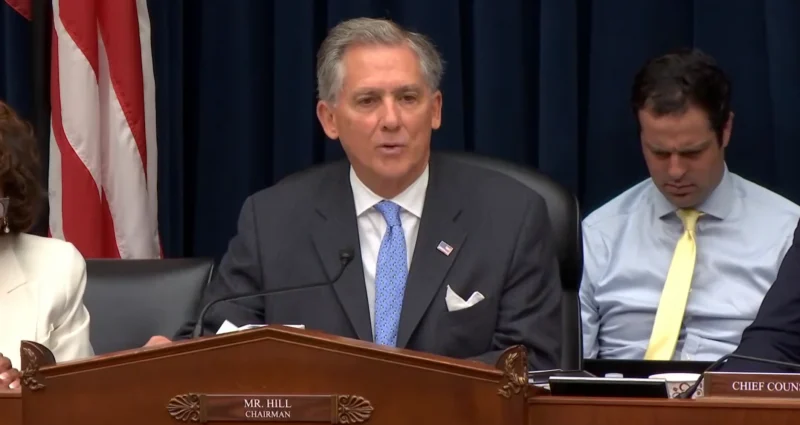
According to prepared remarks from Chairman French Hill, the Vice Chairman of the House Financial Services Committee and a prominent voice in digital asset regulation, the primary objective of the American Reserve Modernization Act is to bring "digital assets held across federal agencies under Treasury custody and consistent oversight." Hill emphasized that the current decentralized method of holding assets across various departments creates risks regarding security, accountability, and fiscal transparency.
By moving these assets to a centralized Digital Asset Stockpile, the Treasury would be tasked with implementing standardized security protocols, including advanced cold-storage solutions and multi-signature authorization frameworks. This move is intended to prevent the mishandling of funds and to provide the American public with a clear accounting of the government’s total digital holdings. Hill’s remarks suggested that the bill is not merely an administrative reshuffling but a strategic necessity to "strengthen security, transparency, and accountability" as digital assets become more integral to the global financial system.
The Evolution of the Strategic Bitcoin Reserve Concept
The concept of a Strategic Bitcoin Reserve has gained significant momentum in 2024, transitioning from a niche idea within the "Bitcoin maximalist" community to a mainstream political platform. The American Reserve Modernization Act of 2026 aligns with broader legislative efforts, such as the "BITCOIN Act" (Boosting Innovation, Technology, and Competitiveness through Optimized Investment Nationwide) proposed by Senator Cynthia Lummis. While Lummis’s proposal focuses on the proactive purchase of up to 1 million BTC over five years, H.R. 8957 focuses on the management of existing and future seized assets.
The political context for this bill is rooted in a growing realization that Bitcoin may serve as a "digital gold" or a hedge against inflationary pressures and sovereign debt. During the Bitcoin 2024 conference in Nashville, prominent political figures, including former President Donald Trump, expressed support for a federal policy that prohibits the government from selling its current Bitcoin holdings. The American Reserve Modernization Act provides the legislative framework to turn that rhetoric into formal policy, ensuring that the U.S. government does not prematurely liquidate assets that could appreciate significantly in value.
Historical Context: From Silk Road to the Treasury
To understand the scale of the proposed Digital Asset Stockpile, one must look at the history of U.S. government crypto seizures. The United States is currently one of the largest holders of Bitcoin in the world, a status achieved not through intentional investment, but through law enforcement actions.
- The Silk Road Seizures (2013-2015): The FBI’s shutdown of the Silk Road darknet market led to the seizure of approximately 144,000 BTC. In the years that followed, the U.S. Marshals Service conducted a series of auctions, selling these coins at prices ranging from $300 to $600. Had the government retained those assets, they would be worth billions of dollars today.
- The Bitfinex Hack Recovery (2022): The DOJ seized roughly 94,000 BTC linked to the 2016 hack of the Bitfinex exchange. This seizure, valued at over $3.6 billion at the time, represented the largest financial seizure in the history of the Department of Justice.
- The James Zhong Case (2022): An additional 50,000 BTC was recovered from James Zhong, who had defrauded the Silk Road marketplace years prior.
As of late 2024, on-chain data analysis from firms like Arkham Intelligence suggests that the U.S. government holds upwards of 200,000 BTC, alongside significant amounts of Ethereum and other stablecoins. The American Reserve Modernization Act would stop the "ad-hoc" liquidation of these assets, instead treating them as a strategic national resource.
Supporting Data and Economic Implications
The establishment of a Strategic Bitcoin Reserve carries profound economic implications. By designating Bitcoin as a reserve asset, the U.S. government would effectively acknowledge its role as a store of value. This could have a stabilizing effect on the market, as the government’s "HODLing" (holding) of assets would reduce the periodic sell-pressure that occurs when the Marshals Service announces an auction.
Supporting data highlights the potential fiscal impact:
- Asset Value: With Bitcoin trading in the $50,000 to $70,000 range, a stockpile of 200,000 BTC represents a $10 billion to $14 billion asset class.
- Inflation Hedge: Proponents argue that as the national debt exceeds $35 trillion, holding a non-inflationary, decentralized asset like Bitcoin provides a unique hedge that traditional fiat-based reserves cannot offer.
- Market Signal: A formal U.S. reserve would likely encourage other nation-states to follow suit, potentially leading to a "sovereign adoption" phase of the digital asset lifecycle.
Official Responses and Political Landscape
The markup of H.R. 8957 has drawn a variety of reactions from both sides of the aisle. While Republicans like French Hill emphasize the bill’s role in modernization and security, some Democrats have expressed concerns regarding the volatility of digital assets. Critics argue that backing federal reserves with an asset known for 50% price swings could introduce unnecessary risk into the Treasury’s balance sheet.
However, the bill also includes provisions for consumer financial protections, fraud prevention, and CFPB (Consumer Financial Protection Bureau) accountability, which suggests a bipartisan attempt to create a comprehensive regulatory framework. Industry advocacy groups, such as the Digital Chamber and the Blockchain Association, have tentatively welcomed the news, noting that centralizing custody under the Treasury is a step toward institutionalizing the asset class within the federal government.
A spokesperson for the Treasury Department, while not commenting directly on the pending legislation, noted that the department remains focused on "mitigating the risks of illicit finance while fostering responsible innovation."
Timeline and Next Steps
The legislative journey for H.R. 8957 is just beginning. Following the committee markup on September 16, the bill must navigate the following stages:
- House Floor Vote: If the bill passes out of committee, it will move to a full vote in the House of Representatives.
- Senate Deliberation: A companion bill or a modified version must pass the Senate, where it will likely face scrutiny from the Senate Banking Committee.
- Presidential Approval: Once both chambers agree on a final version, the bill will be sent to the President’s desk for signature.
The "2026" designation in the bill’s title suggests a phased implementation plan, allowing the Treasury Department time to build the necessary infrastructure and security protocols required to manage a multi-billion dollar digital stockpile.
Analysis of Broader Global Impact
The move to establish a Strategic Bitcoin Reserve is not happening in a vacuum. Globally, countries are reassessing their reserve strategies in light of geopolitical shifts and the weaponization of the dollar-based financial system. El Salvador remains the pioneer in this space, having adopted Bitcoin as legal tender and maintaining a state-owned Bitcoin treasury. Other nations, particularly in the Middle East and East Asia, are reportedly exploring similar sovereign wealth allocations into digital assets.
If the United States successfully passes the American Reserve Modernization Act, it sets a global precedent. It transforms Bitcoin from a "speculative tool used by criminals"—a common narrative in early regulatory circles—into a "strategic national asset." This transition could redefine international finance, potentially leading to a future where digital assets are used alongside gold and foreign currencies to settle international trade and stabilize national economies.
The inclusion of "other digital assets acquired through forfeiture" in the bill is also noteworthy. This implies that the U.S. government will not only hold Bitcoin but potentially a diversified basket of assets including Ethereum, Solana, and various stablecoins. This broad approach ensures that the Treasury is prepared for a multi-chain future where various protocols serve different economic functions.
As the story continues to develop, the focus will remain on the specific language of the bill and whether it gains the bipartisan support necessary to survive the legislative process. For now, the American Reserve Modernization Act stands as a significant marker in the history of finance, representing the first major step toward the formal integration of Bitcoin into the heart of the American financial system.