


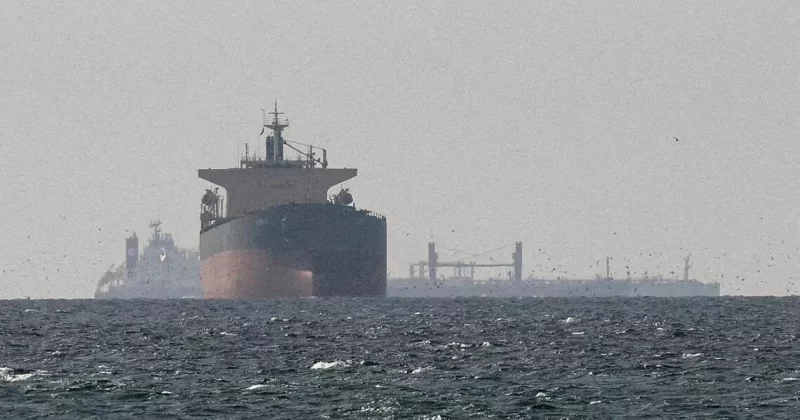
The United States Department of the Treasury has officially permitted a critical sanctions waiver, known as General License 134B, to expire, effectively closing one of the last remaining legal avenues for the transport of Russian seaborne crude oil through international shipping channels. This move, which occurred quietly on May 16, 2026, marks a significant escalation in the multi-year effort by Western powers to restrict the Kremlin’s ability to fund its military operations through energy exports. By allowing the waiver to lapse without a renewal notice, the Office of Foreign Assets Control (OFAC) has signaled a transition toward a more rigid enforcement phase, leaving global shipping companies, insurers, and financial institutions with little room for maneuver when dealing with Russian-origin petroleum products.
The Mechanics and Purpose of General License 134B
To understand the impact of this expiration, it is necessary to examine the specific regulatory function that General License 134B served. Issued in April 2026 as a successor to previous iterations, the license was designed as a "wind-down" provision. Its primary purpose was to provide a grace period for maritime vessels that had already committed to or loaded Russian-origin oil prior to specific sanctions deadlines. By allowing these shipments to complete their deliveries to third-party destinations, the US Treasury sought to prevent a sudden and chaotic disruption of the global oil supply, which could have led to a spike in energy prices and harmed the economies of allied nations.
The expiration of 134B removes this legal safety net. Under the current regulatory environment, any vessel carrying Russian crude that does not strictly adhere to the G7-led price cap mechanism now faces the full weight of US secondary sanctions. This includes being barred from using US-based services, including financial transactions, insurance, and flagging services. For the international shipping community, the message is clear: the period of "orderly transition" has concluded, and the risks associated with Russian energy logistics have reached a new zenith.
A Chronology of Economic Constriction
The lapse of General License 134B is not an isolated event but rather the latest step in a carefully calibrated timeline of economic pressure. The groundwork for this current state of affairs was laid over several years, with a notable acceleration occurring in early 2025.
In March 2025, the expiration of General License 8L represented a major turning point. That license had previously authorized energy-related financial transactions involving several major Russian financial institutions, including VTB Bank, Sberbank, and the Central Bank of the Russian Federation. When 8L was allowed to lapse, it fundamentally severed the primary financial arteries used by international buyers to pay for Russian oil. The immediate result was a measurable decline in Russian seaborne crude export volumes, as risk-averse banks in Europe and Asia began to reject letters of credit associated with Russian energy cargoes.
Following the restrictions on financing, the focus shifted to the physical transport of oil. Throughout late 2025 and early 2026, the US Treasury began blacklisting individual tankers and shipping firms suspected of bypassing the $60-per-barrel price cap through "shadow fleet" operations. General License 134B was the final "off-ramp" for legitimate operators who found themselves caught in the tightening web of regulations. Its expiration now leaves the "shadow fleet"—a loosely organized group of aging, under-insured tankers—as the primary remaining method for Russian oil to reach global markets, albeit at a significantly higher cost and risk to the Russian state.
The Role of the Shadow Fleet and Maritime Risks
As formal legal windows close, the role of the so-called "shadow fleet" becomes central to the discussion. Analysts estimate that Russia has assembled a fleet of several hundred tankers, often registered in jurisdictions with lax oversight and owned by opaque shell companies. These vessels frequently engage in ship-to-ship (STS) transfers in international waters to obscure the origin of their cargo and use spoofing techniques to hide their locations.
However, the expiration of US waivers makes these operations increasingly precarious. Major maritime hubs and bunkering ports are under growing pressure to deny services to vessels that cannot provide proof of valid Protection and Indemnity (P&I) insurance from reputable providers. Since most reputable P&I clubs are based in the G7 or EU, they are prohibited from insuring any cargo priced above the cap. Without the protection of a US waiver, even incidental involvement with these vessels can result in a company being added to the Specially Designated Nationals (SDN) list, effectively ending its ability to operate in the global financial system.
Strategic Posture and Geopolitical Context
The decision to let the waiver expire reflects a broader strategic shift in US foreign policy. The current administration has adopted a posture of "systemic constriction," aiming to reduce Russia’s energy revenue to the point where it can no longer sustain a high-intensity conflict. This policy has been characterized by a move away from broad, sweeping sanctions that might cause global collateral damage, toward surgical strikes on the logistics and financing that underpin the Russian energy sector.
This strategic tightening coincides with a period of heightened volatility in other critical energy corridors. Most notably, the Strait of Hormuz remains a flashpoint of global concern. As one of the world’s most vital energy chokepoints, the Strait sees approximately 20% of the world’s daily petroleum liquids consumption pass through its waters. Continued disruptions or threats to navigation in the Middle East have already strained global supply chains, making the removal of Russian oil from the market a delicate balancing act for Western policymakers. The lapse of the waiver suggests that the US Treasury believes the global market is currently resilient enough to absorb the loss of certain Russian volumes, or that the "shadow fleet" will continue to leak enough oil into the market to prevent a total price collapse, even as Russia’s profit margins are squeezed.
Implications for Global Energy Markets and Oil Prices
Market analysts are closely monitoring the reaction of Brent and West Texas Intermediate (WTI) crude prices to this regulatory change. In the immediate aftermath of the expiration, oil prices showed signs of a "risk premium" being priced back into the market. If Russian export volumes see a significant drop due to the lack of shipping and insurance options, the resulting supply deficit could lead to sustained upward pressure on prices.
Furthermore, the expiration impacts the "Urals" grade of Russian crude, which has historically been a staple for refineries in India and China. While these nations have not formally joined the G7 price cap, their banks and shipping companies are increasingly wary of US secondary sanctions. If Indian and Chinese buyers find it too difficult or expensive to secure shipping for Russian oil, they may be forced to look toward Middle Eastern or Atlantic Basin suppliers, further tightening the global market and potentially driving up costs for consumers worldwide.
Financial Assets and the Cryptocurrency Narrative
The tightening of traditional financial sanctions has historically had ripple effects in the world of digital assets. For investors in the cryptocurrency space, the expiration of General License 134B serves as a reminder of the fragility of the sovereign-led financial system. During periods of intense geopolitical friction and tightening monetary policy, non-sovereign assets like Bitcoin often see increased interest as a perceived hedge against systemic risk.
As the US continues to weaponize the dollar-based financial system through OFAC regulations, there is an ongoing debate regarding "de-dollarization" and the search for alternative settlement layers. While crypto assets are not currently used at a scale sufficient to bypass major energy sanctions, the narrative of "digital gold" gains traction among institutional and retail investors whenever traditional shipping and banking channels are restricted for political reasons. The stress placed on the global financial system by these sanctions serves as a real-world stress test for the thesis that decentralized assets can provide a neutral store of value in an increasingly fractured world.
Official Responses and Expert Analysis
While the US Treasury has not issued a celebratory statement regarding the expiration, the silence itself is seen by experts as a deliberate signal of "business as usual" in the enforcement of sanctions. A former OFAC official, speaking on the condition of anonymity, noted that "the goal is to make the trade of Russian oil so cumbersome, so risky, and so expensive that the Russian state is forced to offer massive discounts, thereby achieving the G7’s goal of price suppression without a total supply cutoff."
From the Kremlin, the response has been one of public defiance, with officials claiming that Russia will simply pivot its trade further toward "friendly nations" and expand its own domestic insurance and shipping capabilities. However, industry data suggests that these domestic alternatives are often insufficient to cover the scale of Russia’s previous export capacity, leading to bottlenecks at major ports like Primorsk and Novorossiysk.
What to Watch in the Coming Weeks
The coming months will be critical in determining whether this latest round of pressure achieves its intended effect. Market participants should focus on several key indicators:
- Russian Export Volumes: Will there be a sharp decline in seaborne shipments, or will the "shadow fleet" successfully absorb the diverted cargo?
- Shipping Rates: A shortage of sanctioned-compliant vessels could lead to a spike in freight costs for non-Russian routes as tankers are shifted around the globe.
- Oil Price Spreads: The discount of Russian Urals crude against Brent will be a primary metric of the sanctions’ success. A widening discount indicates that the expiration of the waiver is successfully increasing the "cost of doing business" for Moscow.
- Regulatory Feedback: Whether the US Treasury issues new "Frequently Asked Questions" (FAQs) or guidance to clarify the status of shipments currently at sea will provide insight into how aggressively they plan to seize or penalize non-compliant vessels.
The expiration of General License 134B represents the closing of a chapter in the West’s economic response to the conflict in Ukraine. It marks the end of the "adjustment period" and the beginning of a more permanent, restrictive reality for the global energy trade. As the US Treasury tightens its grip, the intersection of energy security, geopolitical strategy, and financial innovation will remain the most critical area for investors and policymakers to watch in 2026.














