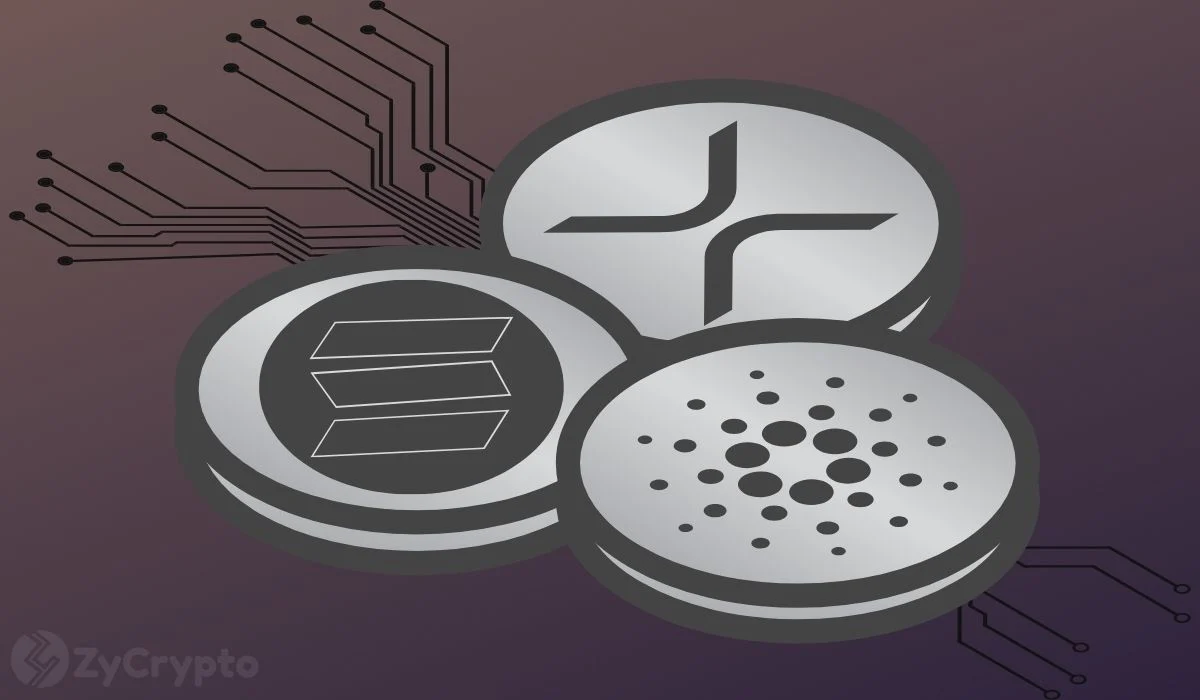
The digital asset landscape is currently witnessing a profound divergence between institutional product development and the underlying performance of the altcoin market. While speculation mounts regarding the filing of exchange-traded funds (ETFs) for prominent assets like XRP, Shiba Inu, and Cardano, a stark reality is setting in for retail investors who had hoped for a broad-based market recovery fueled by institutional capital. Industry analysts and market data suggest that the anticipated "institutional bailout" of the altcoin sector may be a fundamental misinterpretation of how traditional finance (TradFi) giants like BlackRock and Fidelity approach the cryptocurrency ecosystem.
Despite the optimism surrounding the potential for new investment vehicles, a growing consensus among market experts indicates that traditional financial institutions view the vast majority of altcoins with significant skepticism. Rather than seeing them as viable long-term assets, many institutional players categorize these tokens as speculative fundraising mechanisms with little intrinsic link to their underlying project utility. This sentiment is underscored by a period of prolonged underperformance for altcoins, even as Bitcoin and Ethereum continue to dominate the institutional conversation and capital inflows.
The Institutional Strategy and the Myth of the Altcoin Bailout
For months, retail communities have buzzed with the theory that the entry of massive asset managers like BlackRock into the crypto space would provide the necessary liquidity to lift all boats. However, seasoned analysts have dismissed this "bailout" narrative. Institutional strategy is traditionally rooted in risk-adjusted returns and regulatory clarity, two areas where many altcoins continue to struggle.
BlackRock’s approach to the market has been surgical, focusing primarily on Bitcoin as a "digital gold" alternative and Ethereum as a foundational layer for decentralized finance and tokenization. Experts emphasize that these firms have no strategic interest in accumulating the "bags" of retail investors who are currently holding underwater positions in mid-cap and small-cap altcoins. The prevailing view among institutional researchers is that many altcoin projects lack a direct value-accrual mechanism between the success of the platform and the price of the token, rendering them unattractive for fiduciary-grade portfolios.
Technical Decay: Altcoins Struggle Against Long-Term Averages
The disconnect between institutional interest and market reality is perhaps most visible in the technical health of the broader altcoin market. Recent data indicates that approximately 84% of altcoins listed on Binance, the world’s largest cryptocurrency exchange by volume, are currently trading below their 200-day moving average (MA). The 200-day MA is widely considered by traders and institutional analysts as the definitive line between a bull and bear market trend.
This period of underperformance has persisted for nearly eight months, marking the second-longest streak of such bearishness since 2020. The only period of greater sustained weakness was the ten-month downturn experienced during the height of the previous bear market cycle. This suggests that while Bitcoin may be flirting with all-time highs or maintaining stability, the "altcoin season" that many investors expected has failed to materialize.
Furthermore, the Altcoin Season Index, a metric provided by CoinMarketCap that measures whether the top 50 altcoins are outperforming Bitcoin over a 90-day period, currently sits at 48 out of 100. A reading below 75 indicates "Bitcoin Season," confirming that capital remains concentrated in the market leader rather than rotating into higher-risk assets. The Total 3 index, which tracks the total market capitalization of all cryptocurrencies excluding Bitcoin and Ethereum, has continued to slide, reflecting a lack of confidence and liquidity in the broader altcoin space.
Solana as the Bridge to Wall Street
While many altcoins languish, Solana (SOL) has emerged as a potential outlier in the eyes of Wall Street. As Ethereum faces challenges related to scalability and high transaction costs on its base layer, Solana’s high-performance architecture has caught the attention of institutional players looking for efficiency. Recent filings by firms such as VanEck and 21Shares for Solana-based ETFs suggest that the "Big Three" of the crypto world—Bitcoin, Ethereum, and Solana—may be solidifying.
Analysts at Weiss Crypto project a future where the integration of blockchain technology and Wall Street shifts away from speculative trading and toward the tokenization of real-world assets (RWAs). In this scenario, high-performance Layer-1 networks like Solana and Ethereum would serve as the primary infrastructure for global finance.
The vision involves a paradigm shift where traditional stock exchanges could potentially be bypassed. Instead of listing on the NYSE or NASDAQ, companies might choose to issue shares directly on a blockchain. This would allow investors to hold direct ownership of assets in a transparent, 24/7 liquid market, rather than holding tokens that are merely speculative proxies for a project’s potential success.
Deep Dives into Top-Tier Assets: Ethereum, BNB, and XRP
The current market stagnation is not limited to obscure projects; even top-tier assets are feeling the weight of macroeconomic pressure and shifting investor sentiment.
Ethereum (ETH), the second-largest cryptocurrency, recently dipped to $1,579.21, a 2.54% decline. This downward movement has been attributed to hawkish signals from central banks, including the U.S. Federal Reserve, which has maintained a "higher for longer" stance on interest rates. Additionally, Ethereum has shown a strong negative correlation with the S&P 500 recently, failing to act as a hedge during periods of traditional market volatility.
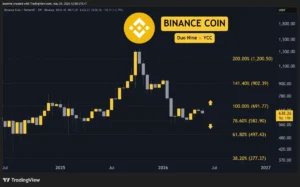
Binance Coin (BNB) has also seen a decline, dropping 2.57% following a technical breakdown below critical support levels. As the native token of the Binance ecosystem, BNB’s price is often a barometer for retail sentiment and exchange activity. The breach of support suggests that even the most utility-heavy tokens are not immune to the broader market drain.
XRP, which remains a focal point for institutional ETF speculation due to Ripple’s ongoing legal battles and partial victories against the SEC, has declined 2.36% to approximately $1.04. For XRP holders, the $1.00 mark remains a critical psychological and technical support level. Traders are currently focused on defending this threshold, as a sustained move below $1.00 could signal further capitulation. The hope for an XRP ETF remains a primary catalyst, but the timeline for such a product remains uncertain given the SEC’s historical reluctance toward non-Bitcoin assets.
The Regulatory Landscape and ETF Prospects
The prospect of XRP, Shiba Inu, and Cardano ETFs reaching the SEC’s table is a double-edged sword. On one hand, the approval of such products would provide a regulated pathway for institutional capital to enter these markets. On the other hand, the SEC’s current "regulation by enforcement" approach poses a significant hurdle.
For Cardano (ADA), the path to an ETF is complicated by the SEC’s previous assertions in various lawsuits that the token may be classified as an unregistered security. Shiba Inu (SHIB), despite its massive community and transition toward a Layer-2 ecosystem (Shibarium), faces the challenge of being perceived primarily as a "meme coin," which may deter the conservative compliance departments of major asset managers.
The success of the Bitcoin and Ethereum ETFs has set a precedent, but it has also raised the bar for what constitutes a "mature" market. The SEC typically looks for a regulated futures market with significant volume to prevent price manipulation before approving a spot ETF. While XRP and Solana have burgeoning futures markets, they are not yet as robust as those of Bitcoin and Ethereum at the time of their respective approvals.
Broader Impact and Market Implications
The current state of the market suggests a "flight to quality" among both institutional and retail investors. The prolonged stagnation of the altcoin market is testing the conviction of even the most resilient market participants. Without a meaningful catalyst—such as a significant shift in Fed policy, a major regulatory breakthrough, or a "killer app" that drives massive on-chain utility—the sideways-to-downward trend for altcoins may continue.
The implications of this shift are significant for the future of the industry. We are likely moving away from an era where any new token could achieve a multi-billion dollar valuation based on hype alone. Instead, the market is beginning to demand clear utility, revenue generation, and institutional-grade infrastructure.
As Wall Street continues its slow but steady encroachment into the digital asset space, the winners will likely be the networks that can facilitate real-world economic activity. Whether it is Solana’s speed or Ethereum’s established ecosystem, the focus has shifted from "what can this token be worth?" to "what can this blockchain actually do?"
In conclusion, while the headlines may focus on the potential for new ETFs, the underlying data paints a picture of a market in transition. The altcoin sector is currently caught between its speculative past and a more regulated, utility-driven future. For investors, the coming months will be a period of intense scrutiny, as the market separates viable technological foundations from the remnants of previous speculative cycles. The defense of key support levels for assets like XRP and Ethereum will be paramount in determining whether the market can find a floor or if the "crypto winter" for altcoins has further to run.