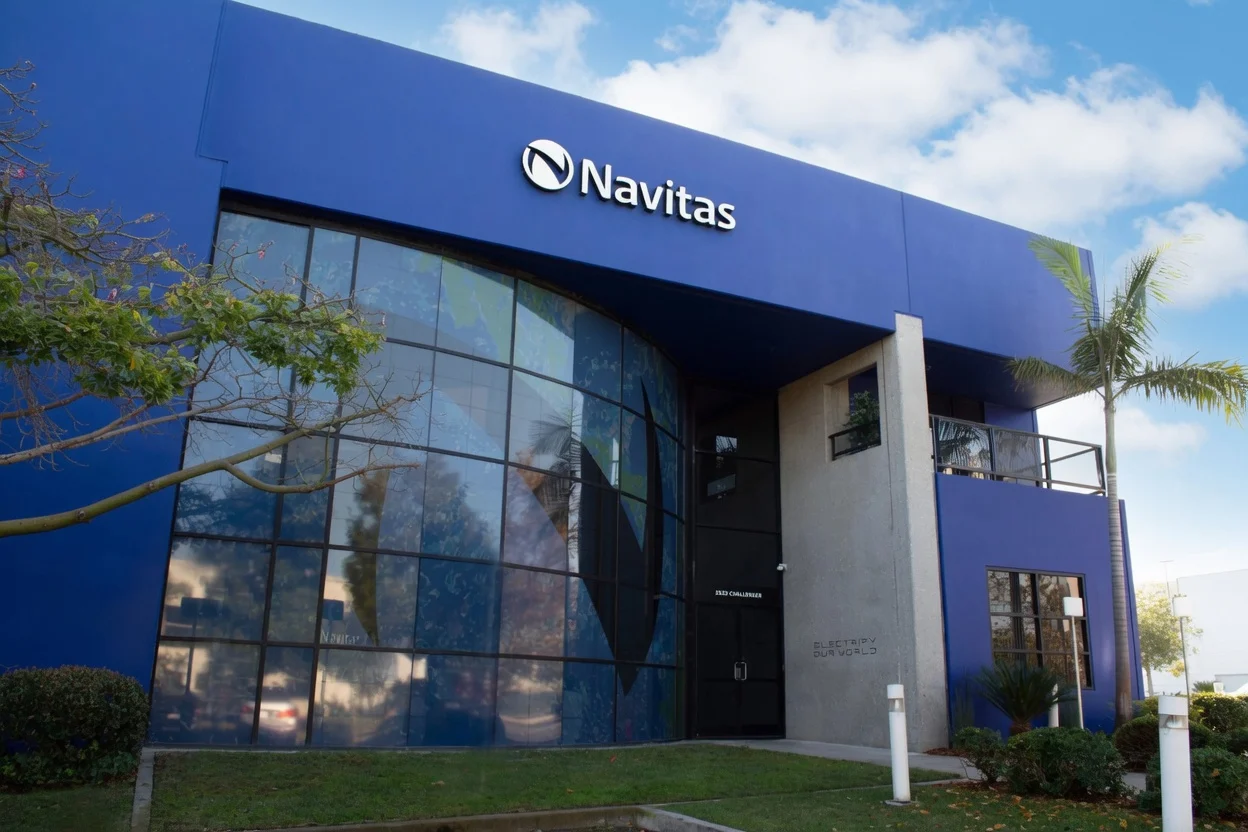
Navitas Semiconductor Corporation (NVTS) saw its shares trade at $11.88, marking an increase of $0.15, following the announcement that the company had secured a significant U.S. Army award. This contract is geared towards the advanced development of silicon carbide (SiC) power devices, specifically targeting a prototype program focused on 10 kV power devices crucial for next-generation defense and critical infrastructure systems. The award not only underscores Navitas Semiconductor’s expanding role in ultra-high-voltage power technology but also aligns with the broader national imperative to strengthen domestic semiconductor manufacturing capabilities.
The Strategic Imperative of Silicon Carbide in Defense
The U.S. Army’s selection of Navitas Semiconductor for this critical project falls under the ALATTIS (Advanced Low-Loss All-Silicon-Carbide-based Power Converter) prototype initiative. This program is specifically designed to establish a robust domestic process for developing advanced silicon carbide devices, a technology deemed vital for modern high-power electronics. Silicon carbide, a wide-bandgap (WBG) semiconductor material, offers substantial advantages over traditional silicon-based devices, particularly in applications requiring high voltage, high frequency, and high-temperature operation. Its superior electrical and thermal properties translate into devices that are significantly more efficient, smaller, lighter, and more robust, making them ideal for the demanding environments encountered in military and defense systems.
The core focus of the ALATTIS program involves the development of 10 kV insulated-gate bipolar transistors (IGBTs) and associated PiN diodes. These components are essential for advanced power conversion and management in a wide array of demanding applications, from military vehicles and radar systems to grid infrastructure and industrial machinery. The Army Research Laboratory (ARL) is sponsoring this work, highlighting the U.S. Department of Defense’s commitment to enhancing the performance and reliability of high-power electronics. This initiative is a direct response to the need for greater energy efficiency, reduced logistical burdens, and improved operational capabilities across critical defense and infrastructure systems, thereby contributing to national security and technological superiority.
Navitas’s Technological Approach and Project Scope
Navitas Semiconductor plans to leverage its patented trench-assisted planar architecture, a design innovation that optimizes device performance by improving current handling and reducing switching losses. This proprietary technology, combined with advanced diode designs, forms the backbone of the development process. The project will involve an iterative cycle of design, fabrication, and rigorous testing, a methodology crucial for validating the manufacturing process and ensuring the devices meet stringent performance, reliability, and production readiness standards. This meticulous approach is designed to de-risk the technology before wider deployment across military or essential infrastructure applications, ensuring that the final products are not only cutting-edge but also dependable under extreme conditions.
The company’s selection by the Army was the culmination of a highly competitive process, where Navitas’s demonstrated technological prowess, proven reliability of its existing product lines, and robust domestic supply-chain capabilities were key differentiators. This competitive win is a testament to Navitas’s leadership in the WBG semiconductor space and its ability to meet the rigorous demands of defense applications. For Navitas, the award opens new avenues into markets where ultra-high voltage, exceptional efficiency, and unwavering reliability are paramount requirements, further diversifying its customer base and application portfolio.

Extending Navitas’s Power Technology Portfolio
The ALATTIS program represents a significant expansion for Navitas, pushing the company beyond its established silicon carbide MOSFET portfolio into a distinct, higher-voltage device category. While MOSFETs are crucial for many power applications, IGBTs are particularly well-suited for extremely high voltages and large power loads, making them indispensable in specialized electrical systems. Successful development and commercialization of these 10 kV SiC IGBTs and PiN diodes would significantly broaden Navitas’s addressable technology range across critical defense, grid, and heavy industrial power markets.
Navitas’s existing expertise in silicon carbide is substantial, primarily through its GeneSiC portfolio, which already offers a comprehensive range of SiC devices with voltage ratings spanning from 650 V to 6.5 kV. Notably, the company commercially released its 6.5 kV silicon carbide MOSFET technology in 2021, targeting high-voltage applications such as electric vehicle fast charging, solar inverters, and industrial motor drives. This prior experience in developing and bringing to market high-voltage SiC devices provides a solid technical foundation and invaluable institutional knowledge for the ambitious leap towards 10 kV SiC transistor development. The journey from 6.5 kV to 10 kV is not merely an incremental step but a significant engineering challenge, requiring advanced material science, innovative device physics, and sophisticated manufacturing techniques to achieve the desired performance and reliability at such elevated voltage levels.
The new devices under the ALATTIS program will integrate Navitas’s extensive material expertise with novel manufacturing processes specifically tailored for superior high-voltage performance and long-term operational reliability. The complementary PiN diodes will play a crucial role in the power conversion platform, ensuring efficient and robust operation under demanding conditions. These technological advancements are expected to enable Navitas to build a more comprehensive ultra-high-voltage offering, significantly expanding its market footprint beyond its current commercial silicon carbide products and solidifying its position as a leader in next-generation power electronics.
Chronology of Navitas’s Silicon Carbide Journey and Market Context
Navitas Semiconductor has been systematically building its expertise and portfolio in wide-bandgap semiconductors. The acquisition of GeneSiC Semiconductor in 2022 was a pivotal moment, significantly expanding Navitas’s market reach into higher power markets with its silicon carbide technology. Prior to this, Navitas had primarily focused on gallium nitride (GaN) power ICs, which are excellent for high-frequency applications at lower to medium power levels. The strategic integration of GeneSiC’s SiC expertise allowed Navitas to offer a broader spectrum of power solutions, addressing applications ranging from 650 V to 6.5 kV.
The 2021 commercial release of its 6.5 kV SiC MOSFETs marked a significant milestone, demonstrating the company’s capability to deliver high-performance solutions for demanding industrial and energy infrastructure applications. This progressive development path, culminating in the pursuit of 10 kV devices under the ALATTIS program, illustrates a clear strategic trajectory towards dominating the ultra-high-voltage power electronics market.
The global silicon carbide market itself is experiencing robust growth. According to various market research reports, the SiC power device market is projected to grow at a Compound Annual Growth Rate (CAGR) exceeding 20% over the next decade, driven by surging demand from electric vehicles, renewable energy systems, industrial power supplies, and increasingly, defense applications. The advantages of SiC – including higher power density, lower energy losses, and enhanced thermal performance – are becoming indispensable for these critical sectors. This growth trajectory provides a favorable backdrop for Navitas’s expanded ventures into high-voltage SiC.
Broader Implications: Domestic Manufacturing and Supply Chain Resilience
The U.S. Army award to Navitas Semiconductor is more than just a contract for advanced technology; it is a significant step towards strengthening the domestic semiconductor supply chain, particularly for strategically important components. The U.S. government, through initiatives like the CHIPS and Science Act of 2022, has prioritized reshoring semiconductor manufacturing and research to mitigate supply chain vulnerabilities and ensure national security. Relying on overseas production for critical defense components poses significant risks, including geopolitical instability, intellectual property theft, and potential disruptions.
The ALATTIS project, by focusing on developing a domestic process for advanced silicon carbide devices, directly contributes to these national goals. It ensures that the U.S. has sovereign capabilities in producing essential power electronics, reducing dependence on foreign sources. This strategic independence is crucial for maintaining military readiness and technological leadership in an increasingly complex global landscape. For Navitas, participating in such a program not only provides direct funding for R&D but also burnishes its credentials as a key player in the national effort to rebuild and secure the semiconductor ecosystem.
NVTS Stock Performance and Future Outlook
The announcement of the Army award served as a positive catalyst for Navitas Semiconductor’s stock (NVTS). During Tuesday’s trading, NVTS shares gained $0.15, closing at $11.88, recovering a portion of the 3.85% decline experienced in the previous session when the broader market faced pressure from rising long-term Treasury yields. This modest but notable uptick reflects investor confidence in the long-term strategic value of the defense contract, despite the absence of immediate financial details such as the award’s specific monetary value or a commercial production schedule.
The project, currently focused on prototype development and process validation, signifies a future potential revenue stream and a validation of Navitas’s technological leadership. While commercial deployment is not immediate, securing such a prestigious government contract enhances the company’s credibility and visibility within high-growth, high-margin sectors. The defense exposure adds another dimension to Navitas’s business, which is already strategically focused on higher-power markets and critical infrastructure applications. The company continues to advance its gallium nitride (GaN) and silicon carbide (SiC) portfolios, targeting diverse power-intensive equipment across data centers, energy infrastructure, electric mobility, and industrial systems.
In conclusion, the U.S. Army’s award to Navitas Semiconductor for 10 kV silicon carbide power development represents a multi-faceted win. It solidifies Navitas’s position at the forefront of ultra-high-voltage SiC technology, expands its market opportunities into the critical defense sector, and plays a vital role in strengthening U.S. domestic semiconductor manufacturing capabilities. While the immediate financial impact remains undisclosed, the strategic implications for Navitas, the U.S. defense industrial base, and the broader advancement of power electronics are substantial, promising long-term growth and technological innovation.