


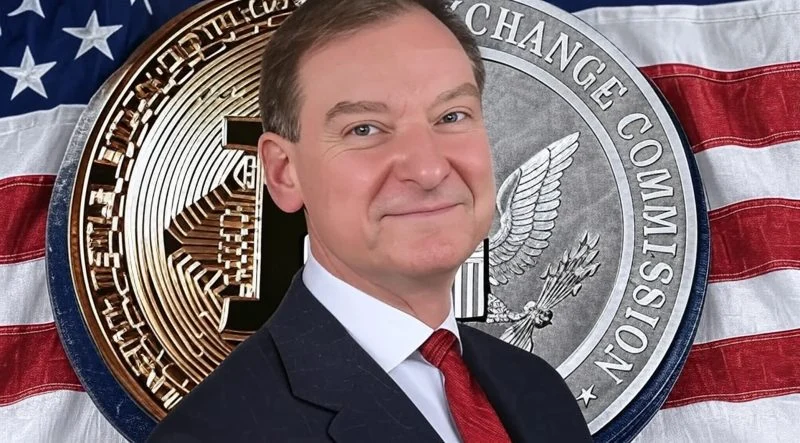
In a comprehensive televised interview with CNBC on July 27, 2026, Securities and Exchange Commission (SEC) Chairman Paul Atkins detailed a strategic pivot for the agency regarding the regulation of digital assets. Atkins stated that while the SEC remains hopeful for a legislative solution from Congress, the agency is fully prepared to exercise its own rulemaking authority to establish a regulatory framework for the cryptocurrency market if the proposed CLARITY Act fails to pass. This announcement marks a significant moment in the ongoing effort to bring legal certainty to the multi-trillion-dollar digital asset industry, highlighting a growing tension between the need for immediate oversight and the slower pace of the federal legislative process.
Atkins emphasized that the SEC is "ready, willing, and able" to draft and implement its own rules to address market structure, transparency, and investor protection. However, he maintained that a statutory foundation provided by Congress remains the "preferred path" for the industry and the regulator alike. According to Atkins, legislative action is the only way to "future-proof" the regulatory environment, providing a level of permanence that agency rulemaking—which can be subject to the whims of changing administrations and legal challenges—cannot offer.
The Push for the CLARITY Act and Statutory Certainty
The CLARITY Act (Clarifying Lawful Assets and Risk in Trading for Yield) represents the most ambitious attempt to date by the U.S. Congress to define the boundaries of digital asset regulation. The bill aims to provide a clear distinction between which digital assets are classified as securities under the SEC’s jurisdiction and which are commodities overseen by the Commodity Futures Trading Commission (CFTC). This distinction has been the central point of contention in dozens of high-profile lawsuits over the past decade.
During his interview, Atkins argued that the legislation would provide the SEC with a clear "North Star" for oversight. "We’re doing all we can to help them [Congress] answer their questions and provide technical assistance," Atkins said. "But ultimately, statute is the way to future-proof something. We need the certainty of a statute that will help future-proof so that we have clear direction."
The Chairman’s comments reflect a desire to move away from the "regulation by enforcement" era that characterized much of the early 2020s. By securing a legislative mandate, the SEC would be insulated from claims of overreach, as its actions would be grounded in specific, modern laws rather than interpretations of the 1934 Securities Exchange Act. For the industry, the CLARITY Act promises to remove the "grey area" that has historically driven American crypto firms to seek registration in more permissive jurisdictions like Bermuda, the UAE, or the European Union under its MiCA framework.
Legislative Gridlock and the Senate’s Shifting Priorities
Despite the urgency expressed by the SEC and industry advocates, the CLARITY Act’s path through the Senate has become increasingly narrow. In a recent turn of events, Senate leadership has sidelined digital market structure legislation to prioritize a pressing Russia sanctions package and a backlog of presidential nominees. This shift in focus comes at a critical time, as lawmakers prepare to depart for their traditional August recess, leaving very few "floor days" available for complex financial legislation.
The compressed legislative calendar is not the only hurdle. Negotiations have stalled over controversial government ethics provisions tied to President Donald Trump’s personal and business interests in the crypto sector. Critics in the Senate have demanded more stringent disclosure requirements and "cooling-off" periods for officials involved in digital asset policy, citing potential conflicts of interest given the executive branch’s vocal support for the industry. These unresolved ethics clauses have turned what was once a bipartisan effort into a more polarized debate, threatening to derail the bill entirely for the 2026 session.
If the Senate fails to bring the CLARITY Act to a vote before the recess, the likelihood of passage this year drops significantly. Historically, legislative momentum in Washington is difficult to regain during the final quarters of a mid-term election cycle, as political attention shifts toward campaigning and constituent services.
The SEC’s Backup Plan: Rulemaking and the GENIUS Act
Should the CLARITY Act fail to materialize, the SEC is prepared to move forward with a series of administrative rules. This "Plan B" would involve the SEC using its existing authority under the Securities Act of 1933 and the Securities Exchange Act of 1934 to define specific standards for digital asset custody, exchange registration, and tokenization.
Atkins noted that while this path is less permanent than a statute, it is necessary to prevent a regulatory vacuum. The SEC’s rulemaking would likely focus on several key areas:
- Tokenization of Public Markets: Creating a pathway for traditional securities to be issued and traded on distributed ledger technology (DLT).
- Qualified Custody: Clarifying which entities are permitted to hold digital assets on behalf of institutional investors.
- Market Integrity: Establishing anti-manipulation and transparency rules for digital asset trading platforms.
Furthermore, if the CLARITY Act stalls, regulatory progress is expected to shift toward the implementation of the GENIUS Act. The GENIUS Act (Government Efficiency, Network Infrastructure, and Universal Standards) is seen by some as a more modular alternative to the comprehensive CLARITY Act. It focuses on the technological infrastructure of the financial system rather than broad jurisdictional definitions. In tandem with the GENIUS Act, both the SEC and the CFTC would likely embark on a joint rulemaking spree to coordinate their oversight of the markets, though without the explicit statutory shield provided by the CLARITY Act, these rules could face significant litigation under the "Major Questions Doctrine."
Industry Reactions and Market Implications
The reaction from the digital asset industry to Atkins’ comments has been a mixture of relief and apprehension. On one hand, market participants welcome the SEC’s willingness to provide clarity through rulemaking if Congress remains deadlocked. On the other hand, there is a deep-seated fear that agency rules without a statutory backing will lead to a "pendulum effect," where a future SEC Chair could simply revoke or rewrite the rules, leading to renewed instability.
"Chairman Atkins is signaling that the ‘wait and see’ approach is over," said a senior policy analyst at a leading digital asset trade association. "The industry needs a permanent home in the U.S. legal code. While we trust this current Commission to draft fair rules, the risk is that those rules are only as good as the current administration. We need the CLARITY Act to ensure we aren’t back in court five years from now."
Supporting data suggests that the lack of regulatory certainty has had a tangible impact on the U.S. economy. According to a 2025 report on digital innovation, the U.S. share of global crypto developers fell from 40% to 26% over a four-year period, with many citing legal ambiguity as the primary reason for relocating. A successful passage of the CLARITY Act is projected to unlock billions in institutional capital that currently remains on the sidelines due to compliance concerns.
Analysis: The Risk of Administrative Rulemaking
The shift toward SEC-led rulemaking, while proactive, carries inherent risks. Under the Administrative Procedure Act (APA), the SEC must engage in a lengthy process of proposing rules, soliciting public comment, and conducting economic impact analyses. This process can take 12 to 24 months to complete. Moreover, rules issued by the SEC are subject to judicial review.
Recent Supreme Court rulings have curtailed the power of federal agencies to interpret their own mandates. Without the CLARITY Act, any rule the SEC writes regarding "crypto-asset securities" could be challenged in court by firms arguing that the agency is exceeding the authority granted to it by Congress nearly a century ago. This legal "ping-pong" is exactly what Atkins hope to avoid by pushing for a statute.
However, Atkins’ interview serves as a strategic "shot across the bow" to Congress. By declaring the SEC’s readiness to act independently, he is reminding lawmakers that if they do not define the rules of the road, the executive branch will do it for them.
Chronology of Recent Regulatory Events
To understand the current stakes, it is essential to view the timeline of digital asset regulation over the last eighteen months:
- January 2025: The new administration takes office, promising a "pro-innovation" approach to digital assets and appointing Paul Atkins as SEC Chair.
- March 2025: The initial draft of the CLARITY Act is introduced in the House of Representatives with bipartisan support.
- June 2025: The SEC begins a series of "technical assistance" sessions with the Senate Banking Committee to refine the bill’s language.
- January 2026: The House passes the CLARITY Act in a landmark vote, sending the bill to the Senate.
- April 2026: Controversy arises over "Section 402" of the bill, which deals with executive branch ethics and crypto holdings, leading to a stalemate in the Senate.
- July 2026: Senate leadership prioritizes Russia sanctions and nominees, effectively stalling the CLARITY Act and prompting Atkins’ CNBC interview.
Looking Ahead: The August Recess and Beyond
As the August recess approaches, the window for legislative action in 2026 is closing. If the Senate does not move on the CLARITY Act within the next two weeks, the burden of regulation will fall squarely on the shoulders of Chairman Atkins and the SEC.
The industry will be watching closely to see if the SEC begins the formal notice-and-comment process for new rules in the autumn. While such a move would provide a stopgap measure for a market hungry for guidance, it would also signal a failure of the legislative branch to address one of the most significant shifts in the modern financial landscape.
For now, the SEC remains in a state of "high alert," ready to transform from a collaborator with Congress into a primary architect of digital asset policy. The coming months will determine whether the U.S. crypto market will be governed by the "lasting certainty" of a congressional statute or the more flexible, yet more vulnerable, framework of agency rulemaking.














